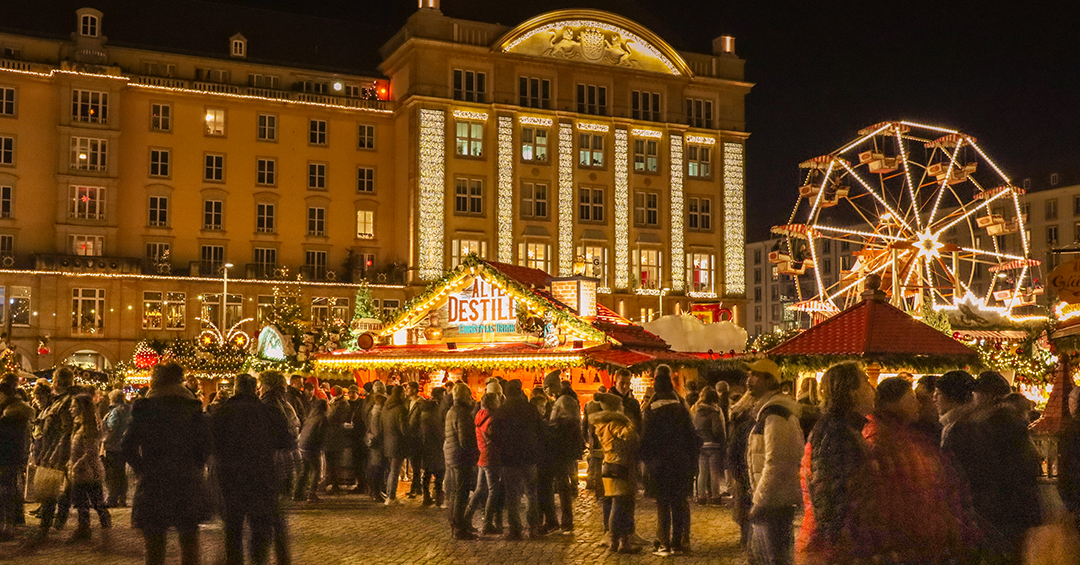
I have been to Dresden once properly, in December, and a second time only as a change of trains, long enough to step onto the platform and no further. It is the first visit that stayed with me. I walked out of Dresden’s main station (Hauptbahnhof) in the early evening and found that the way into the old town was itself a Christmas market: a long boulevard of lit stalls running up Prager Straße, a tall illuminated tree at its heart, drawing me toward the centre. By the time I reached the old market square (Altmarkt) and its Striezelmarkt at the top, I had already had my first cup of mulled wine (Glühwein).
Germany has hundreds of Christmas markets, but Dresden holds a claim none of the others can match: its Striezelmarkt has been running since 1434, which makes it the oldest documented Christmas market in the country. What struck me, though, was not how old it felt but how polished. Dresden’s markets have a curated, almost modern sheen to them, set against a baroque old town that looks like a stage set once the lights come on. This is a practical, been-there guide to what to see, what to eat, and how to plan the trip, written mainly for Indian travellers weighing up a European winter break.
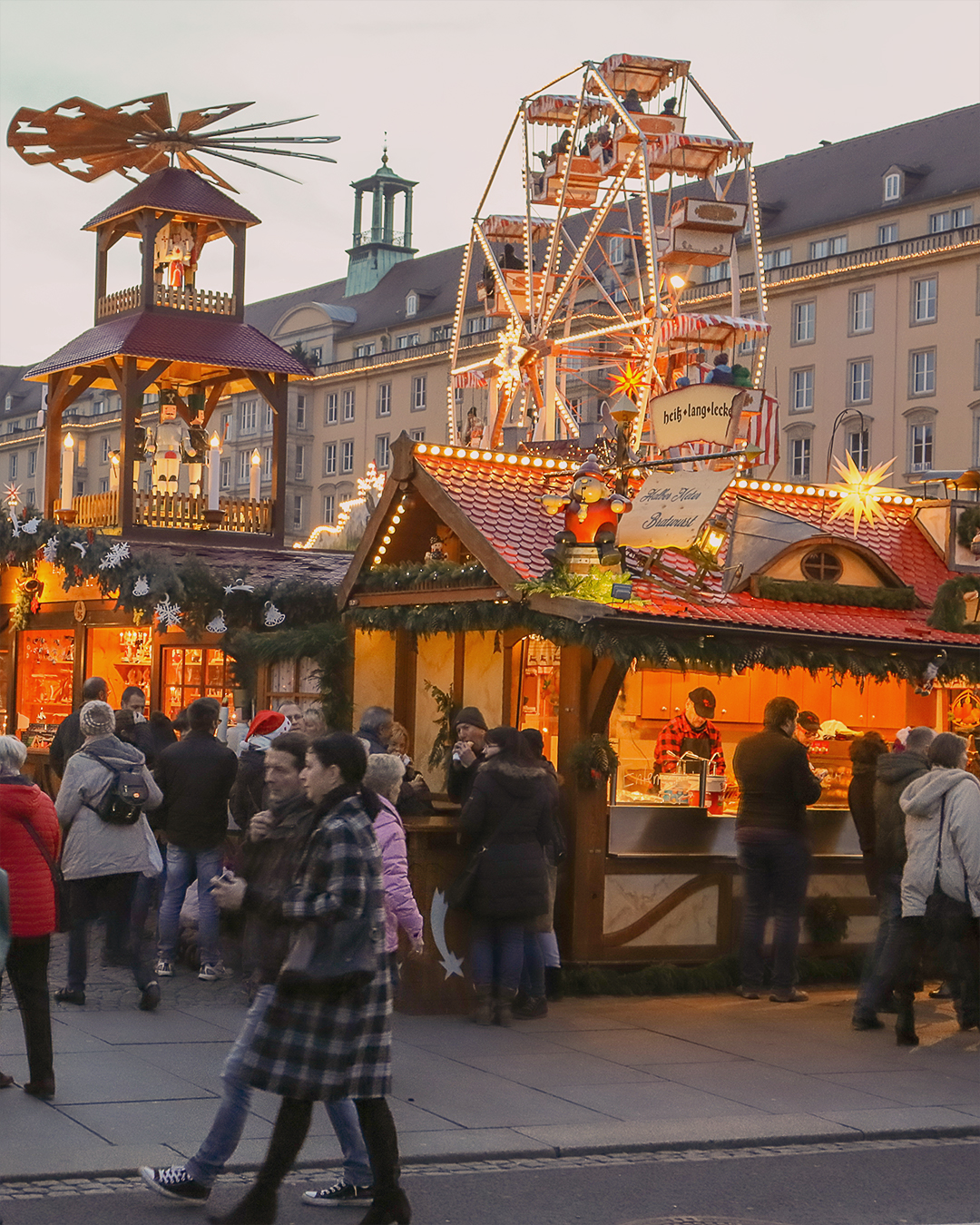
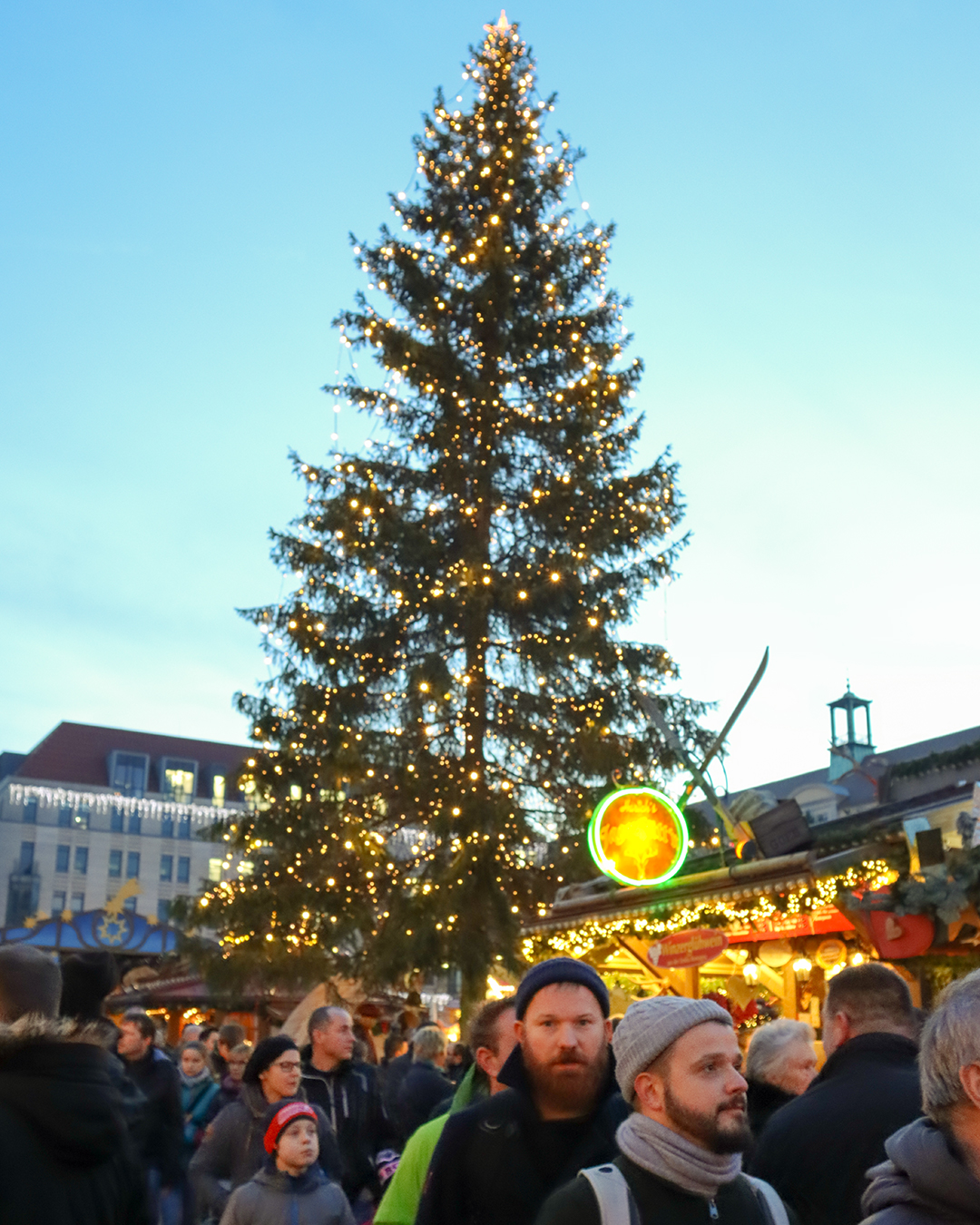
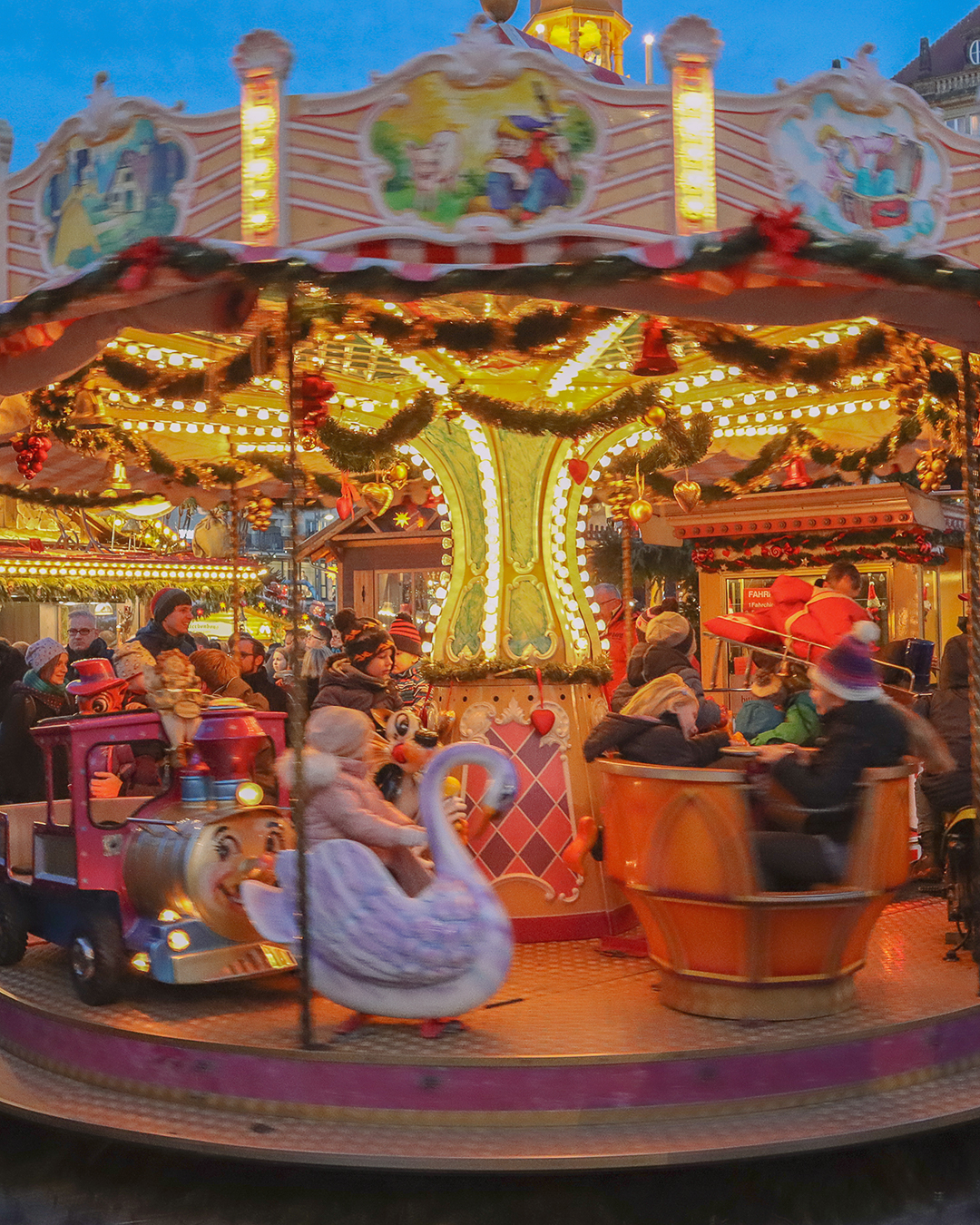
What makes Dresden’s Christmas different
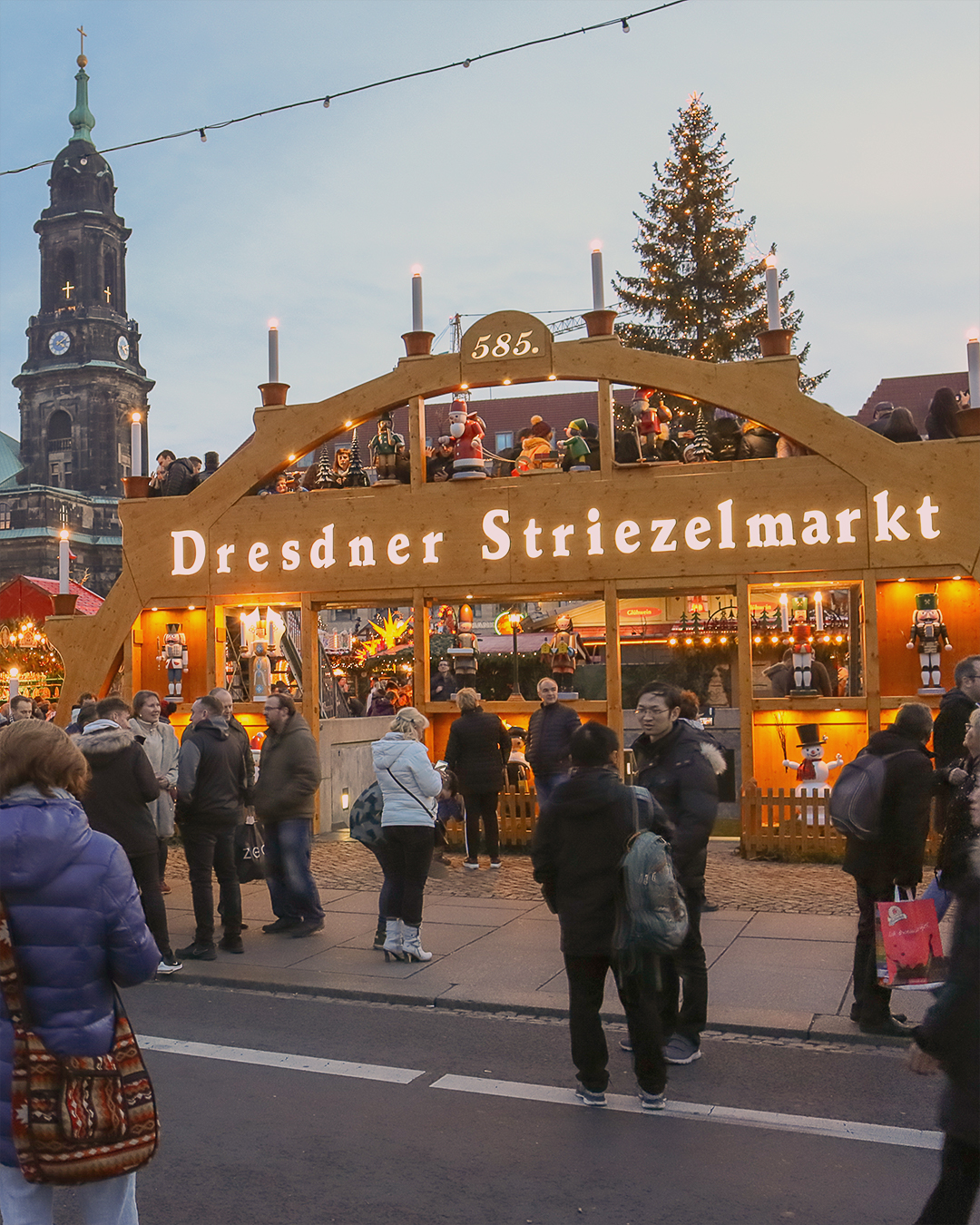
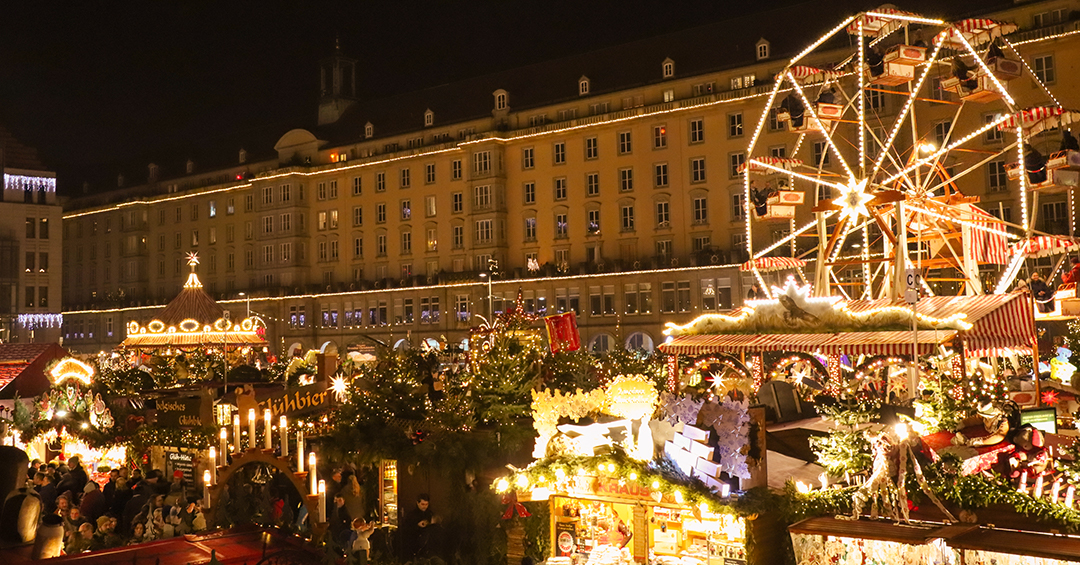
Two things set Dresden apart. The first is age. When the Striezelmarkt opened in 1434 it was a one-day market where townspeople bought the meat and baked goods they needed for the fast before Christmas. Nearly six hundred years later it still fills the old market square, and it takes its name from the Striezel, the early word for the fruit loaf we now call Stollen. The market spills out beyond the square too: a second run of stalls stretches down the long pedestrian boulevard of Prager Straße, so the festivities greet you the moment you leave the station.
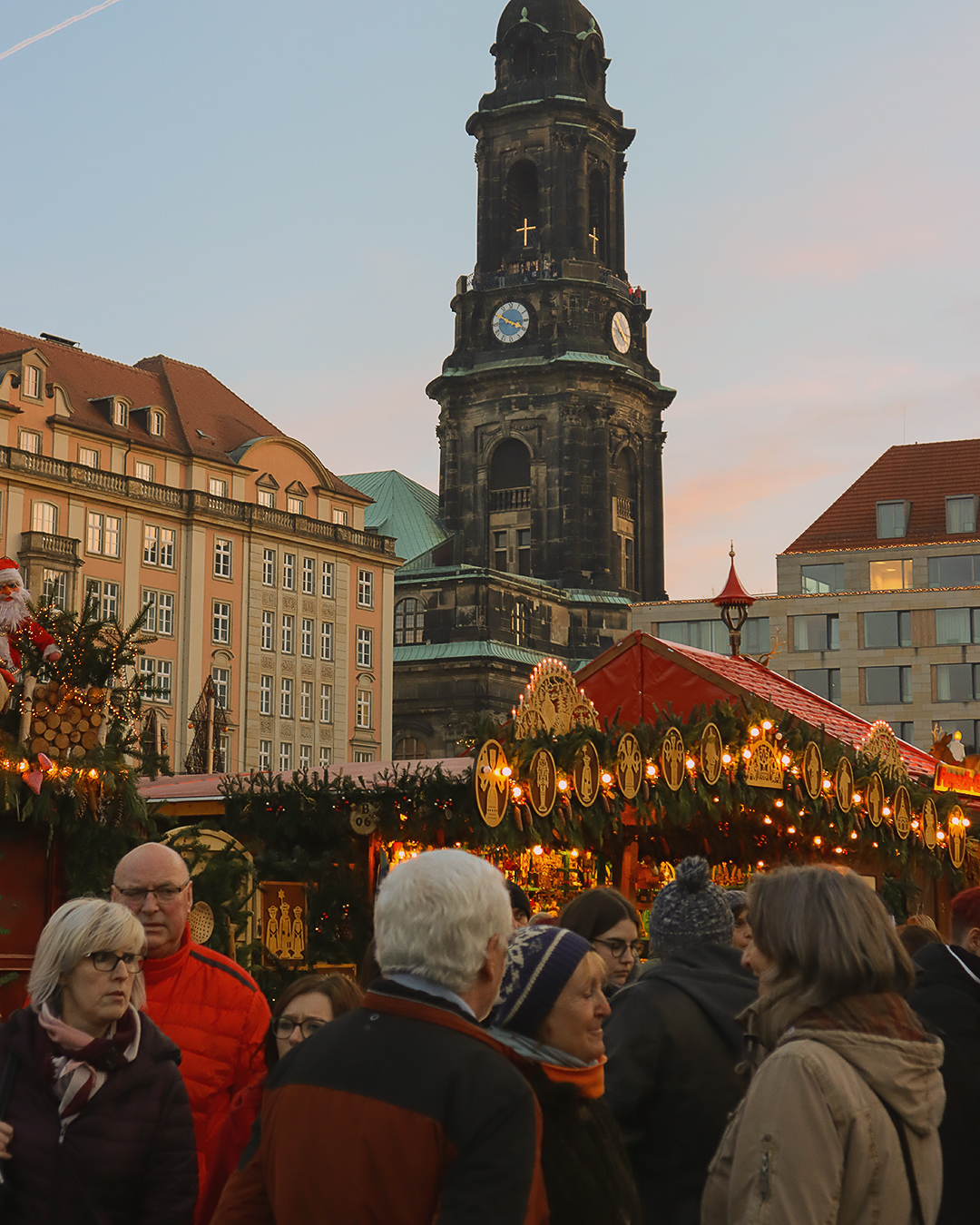
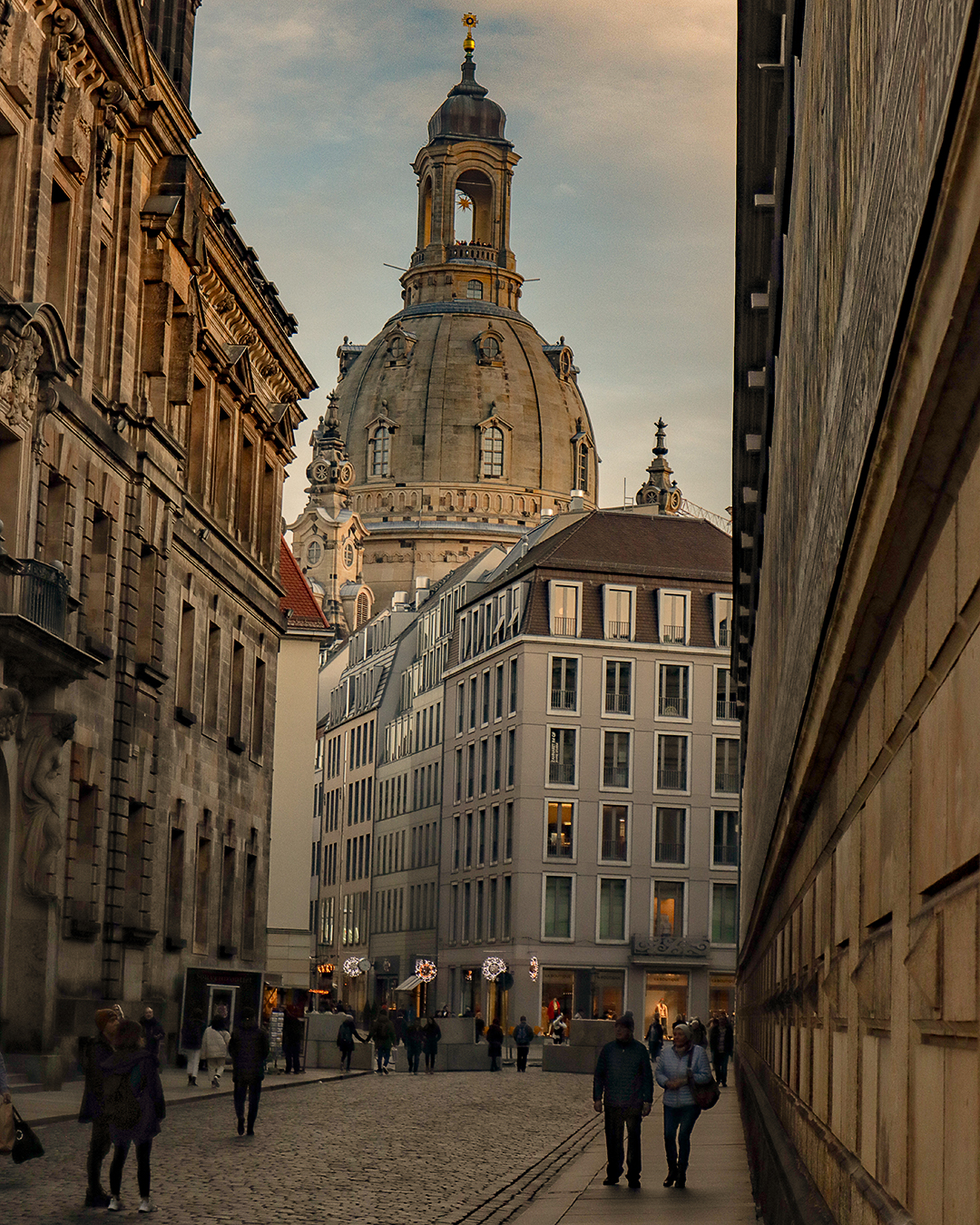
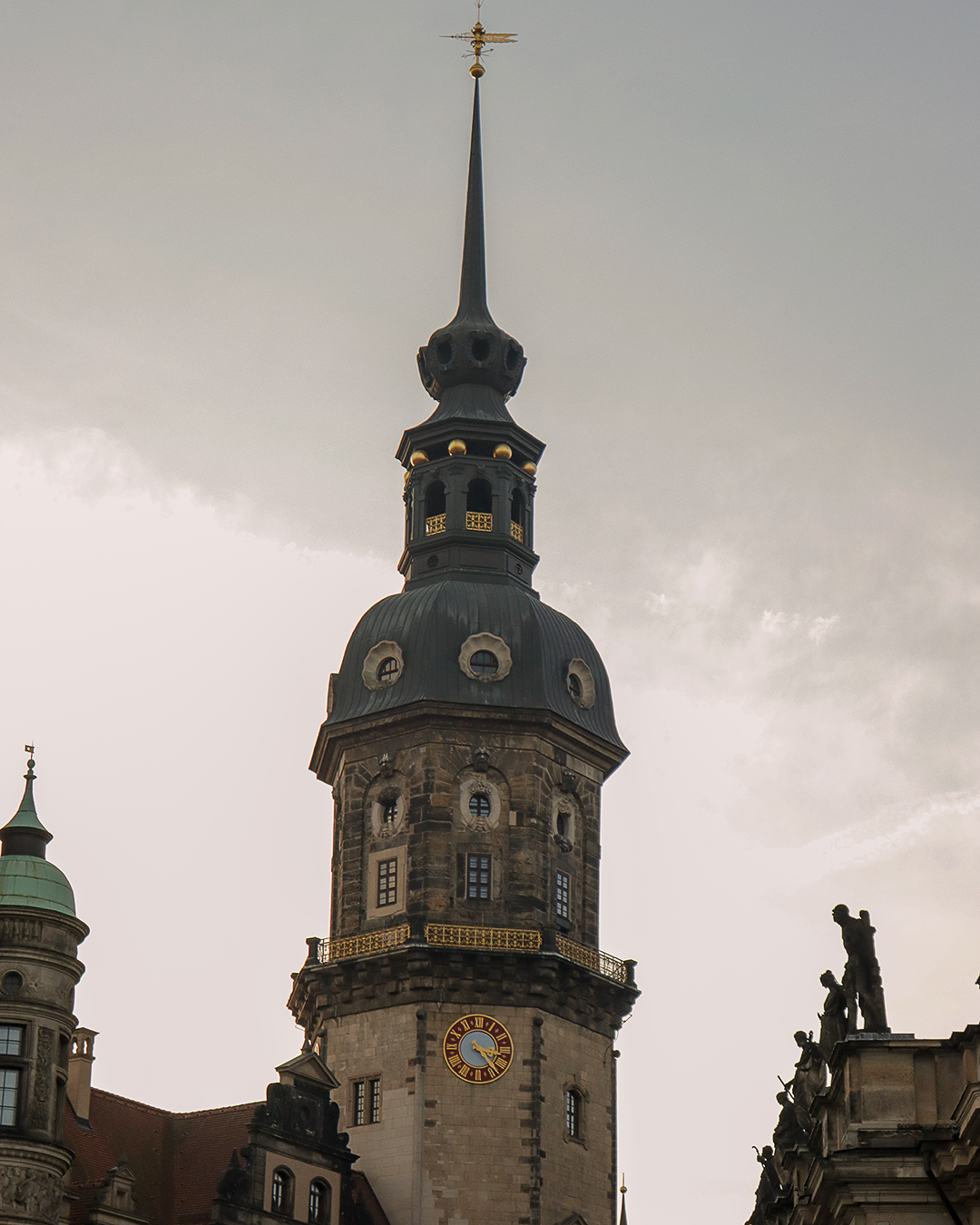
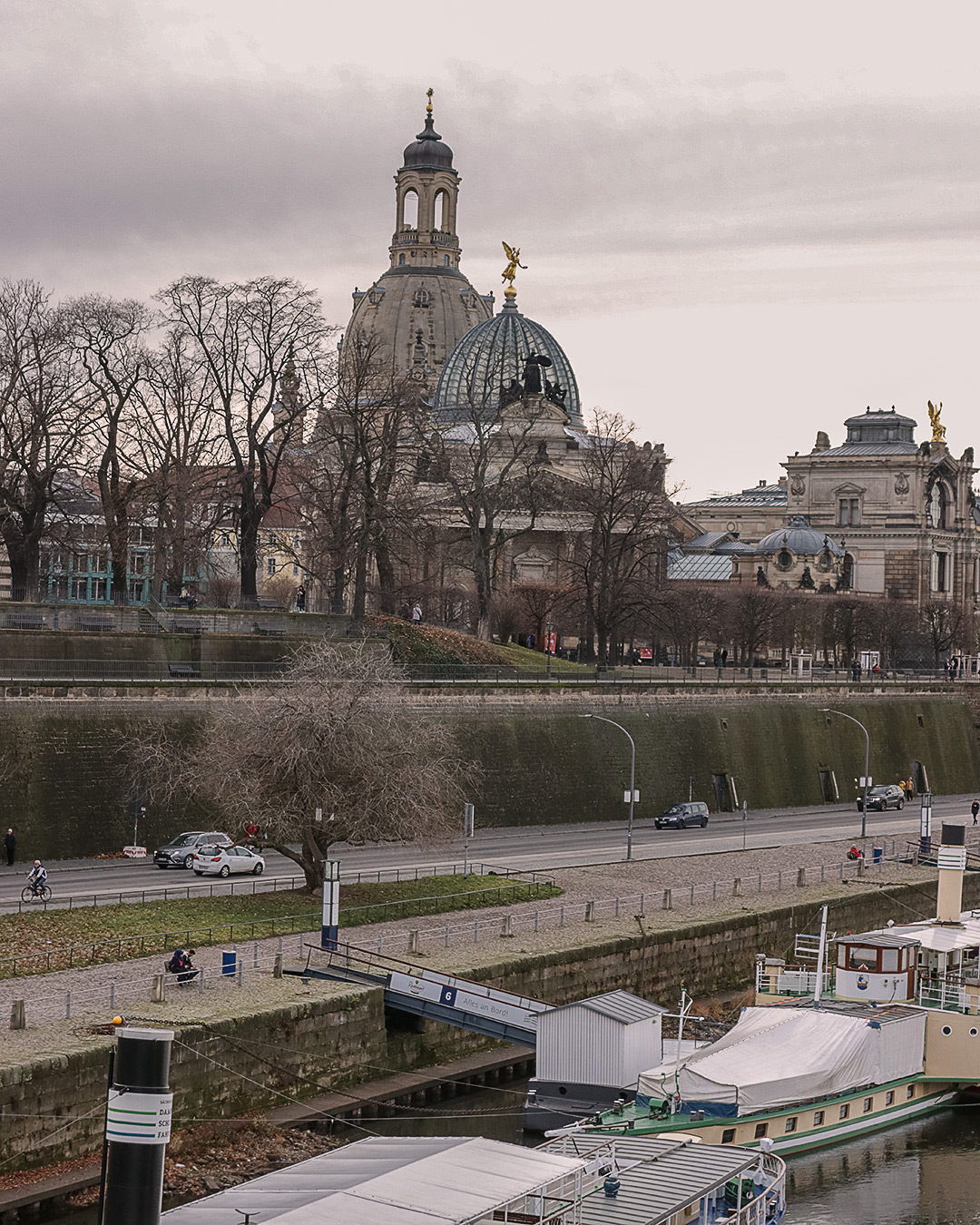
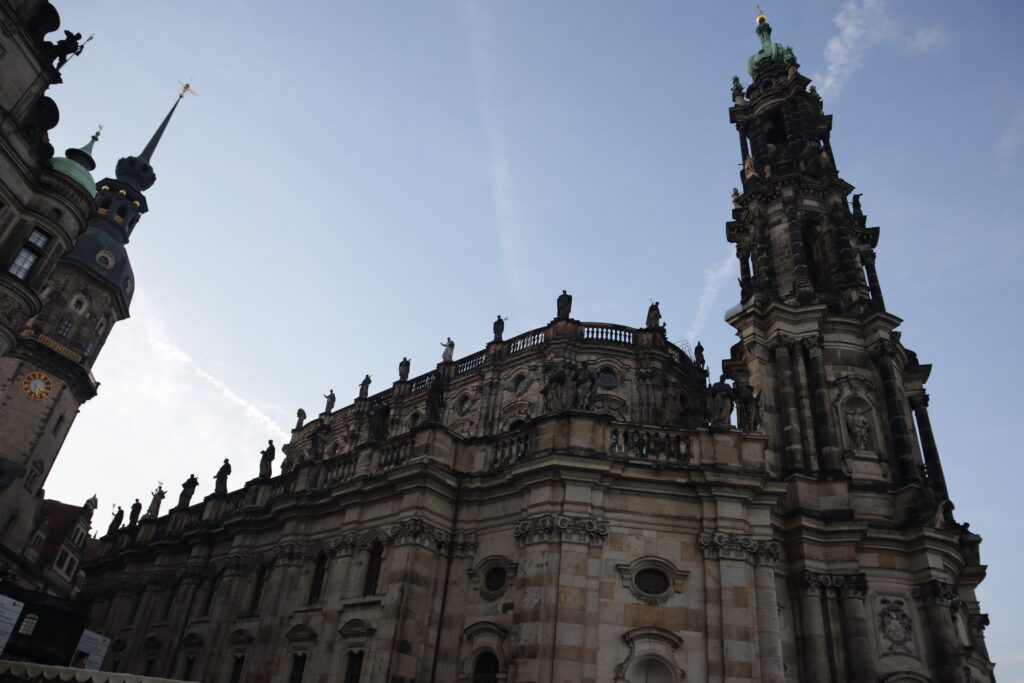
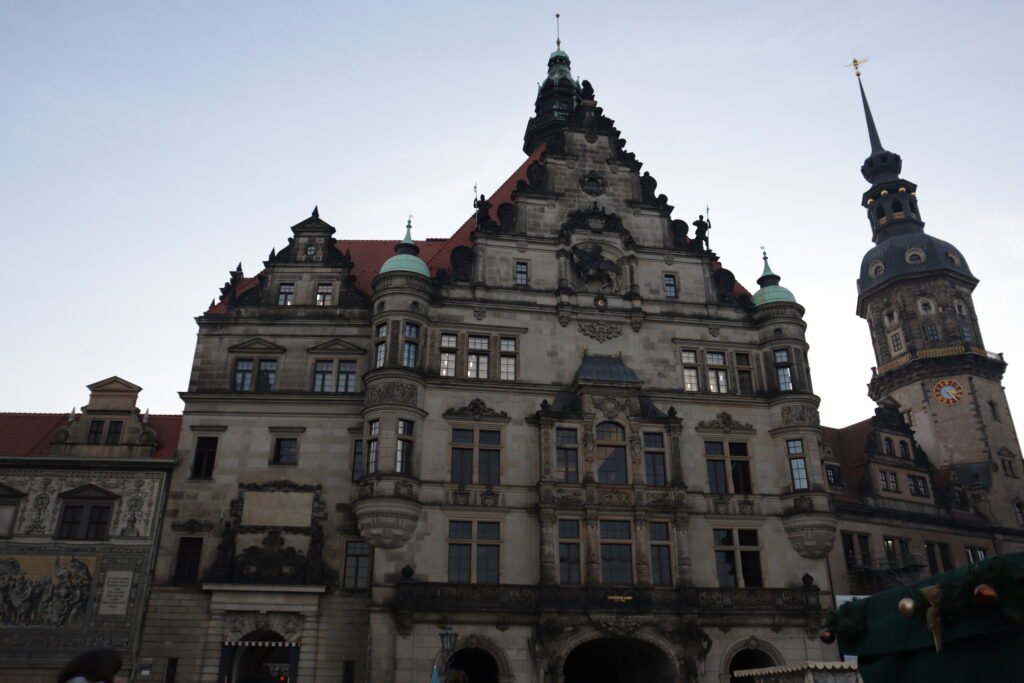
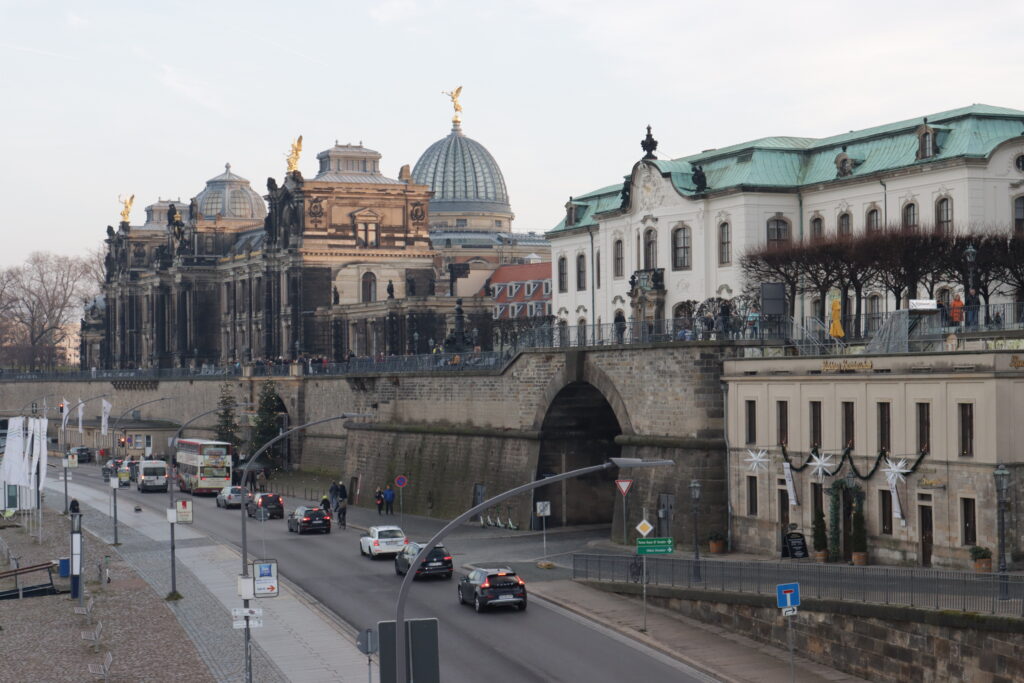
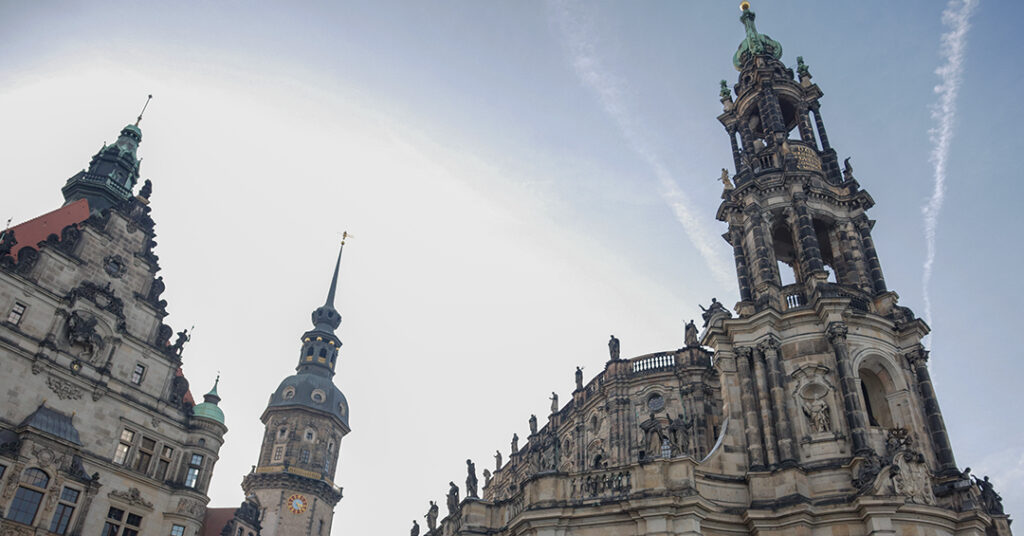
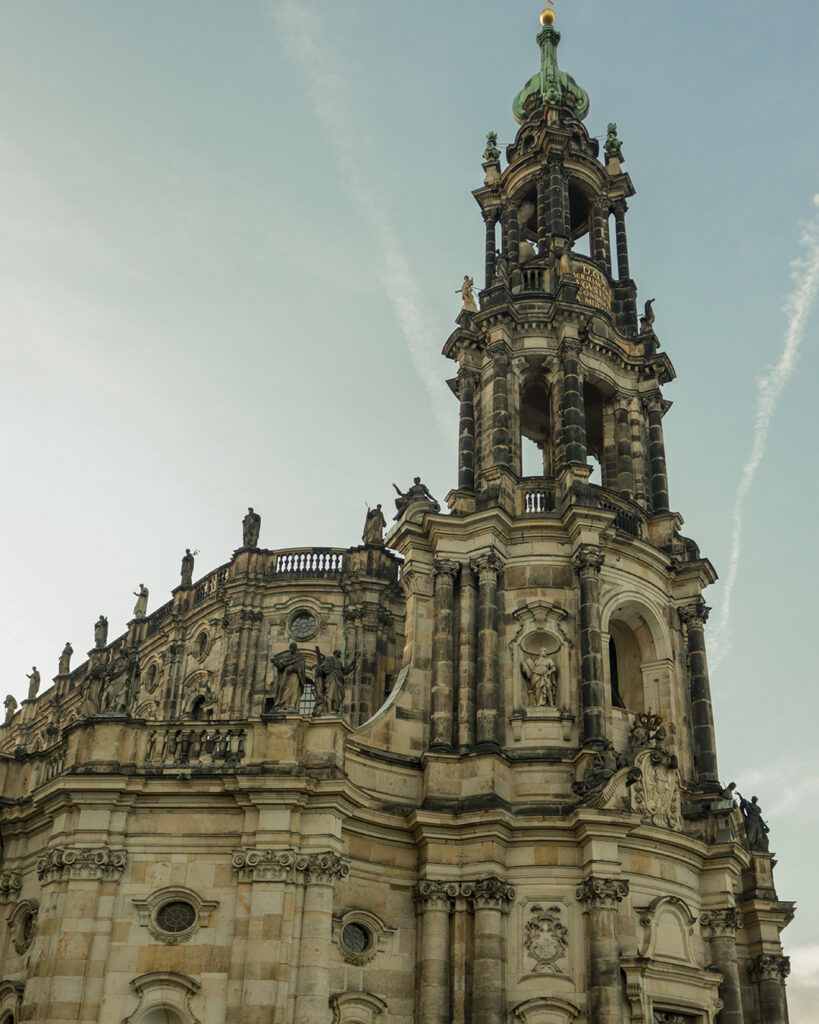
The second is the setting, and it comes with a heavier history. Dresden was largely destroyed in the bombing of 1945, and much of what you see today is careful restoration rather than survival. The centre has been rebuilt over the decades, and once you know that, you notice it everywhere: in the mix of blackened original stone and clean new masonry on the Church of Our Lady (Frauenkirche), in the polished baroque skyline of the Zwinger, the opera house (Semperoper), and the royal palace (Residenzschloss). It gives the whole city, and its Christmas markets, a restored and slightly curated feel that no other German Christmas city quite shares.
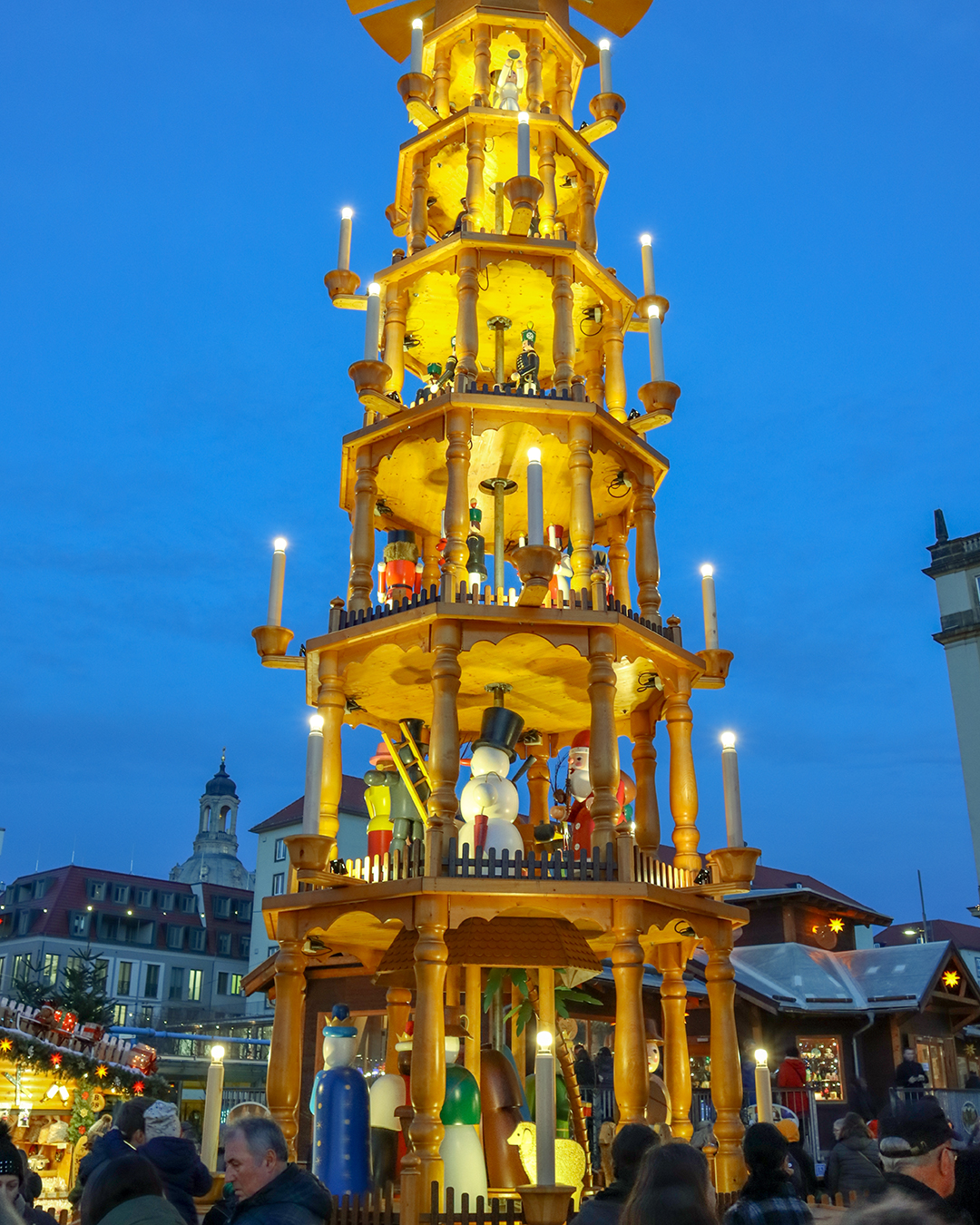
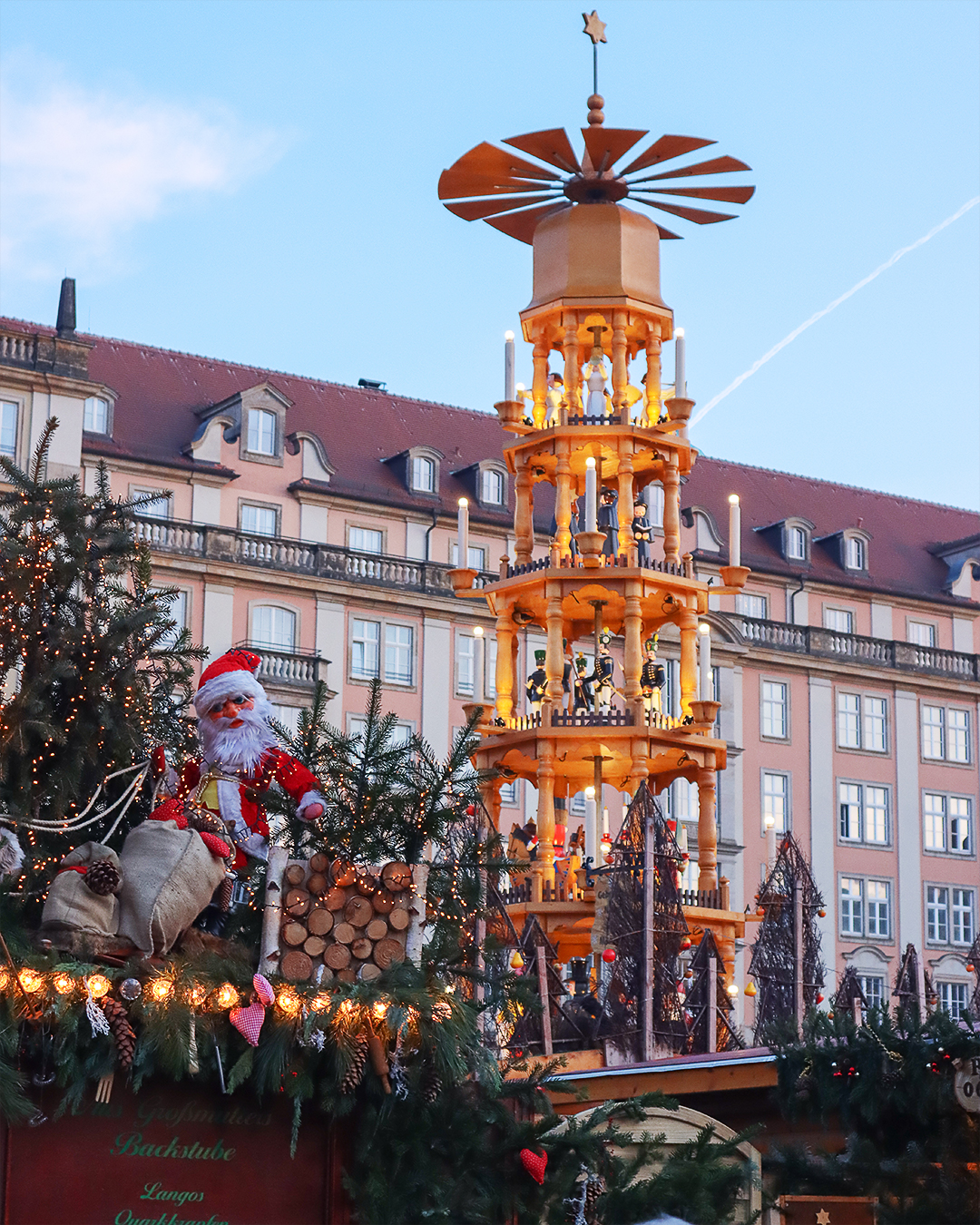
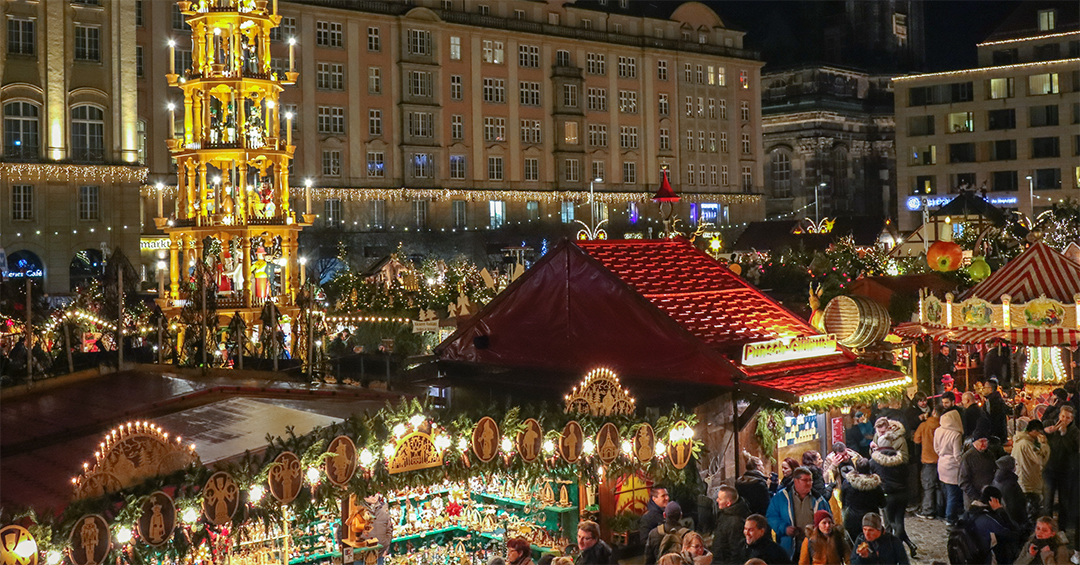
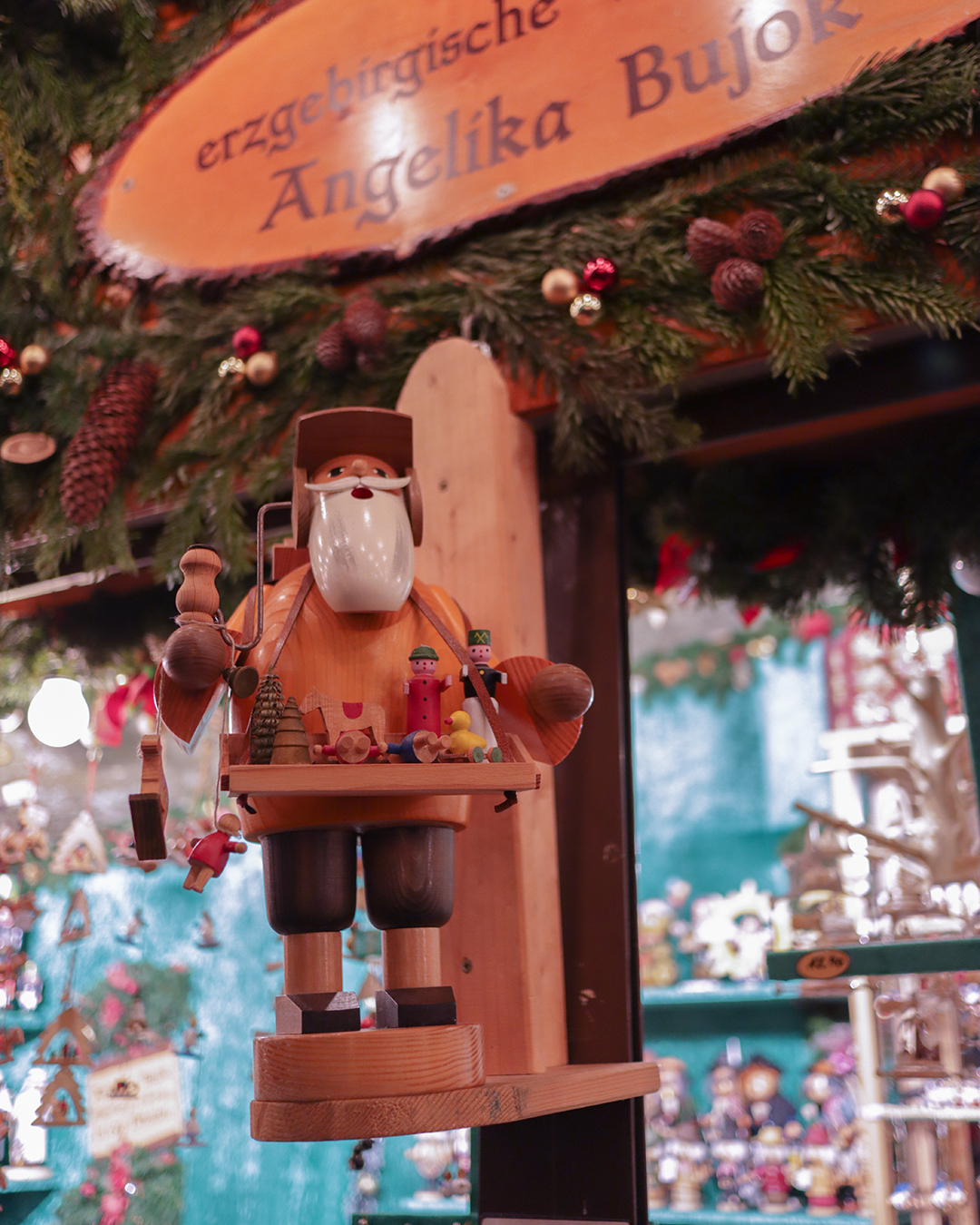
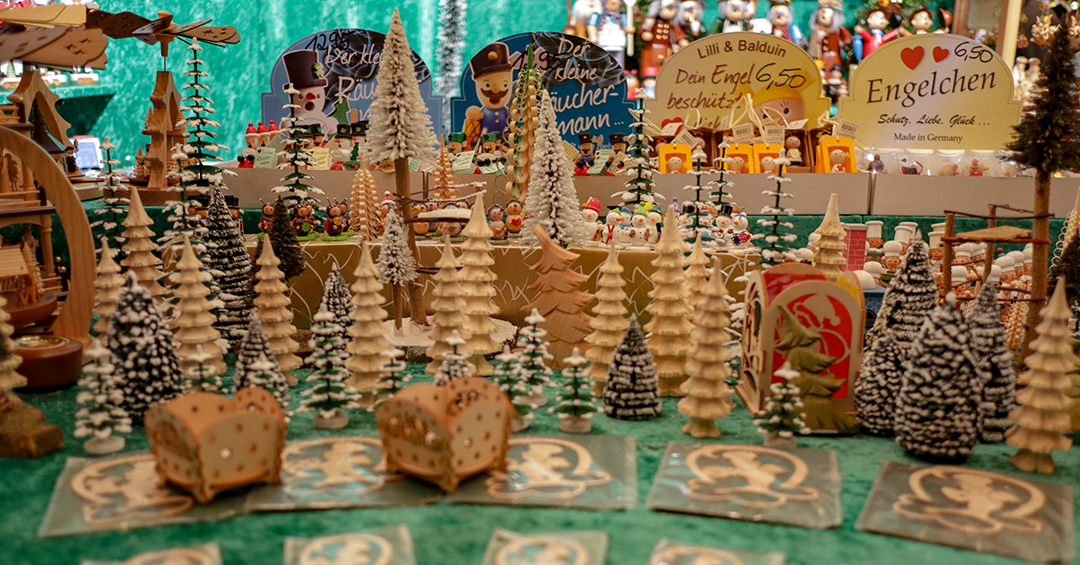
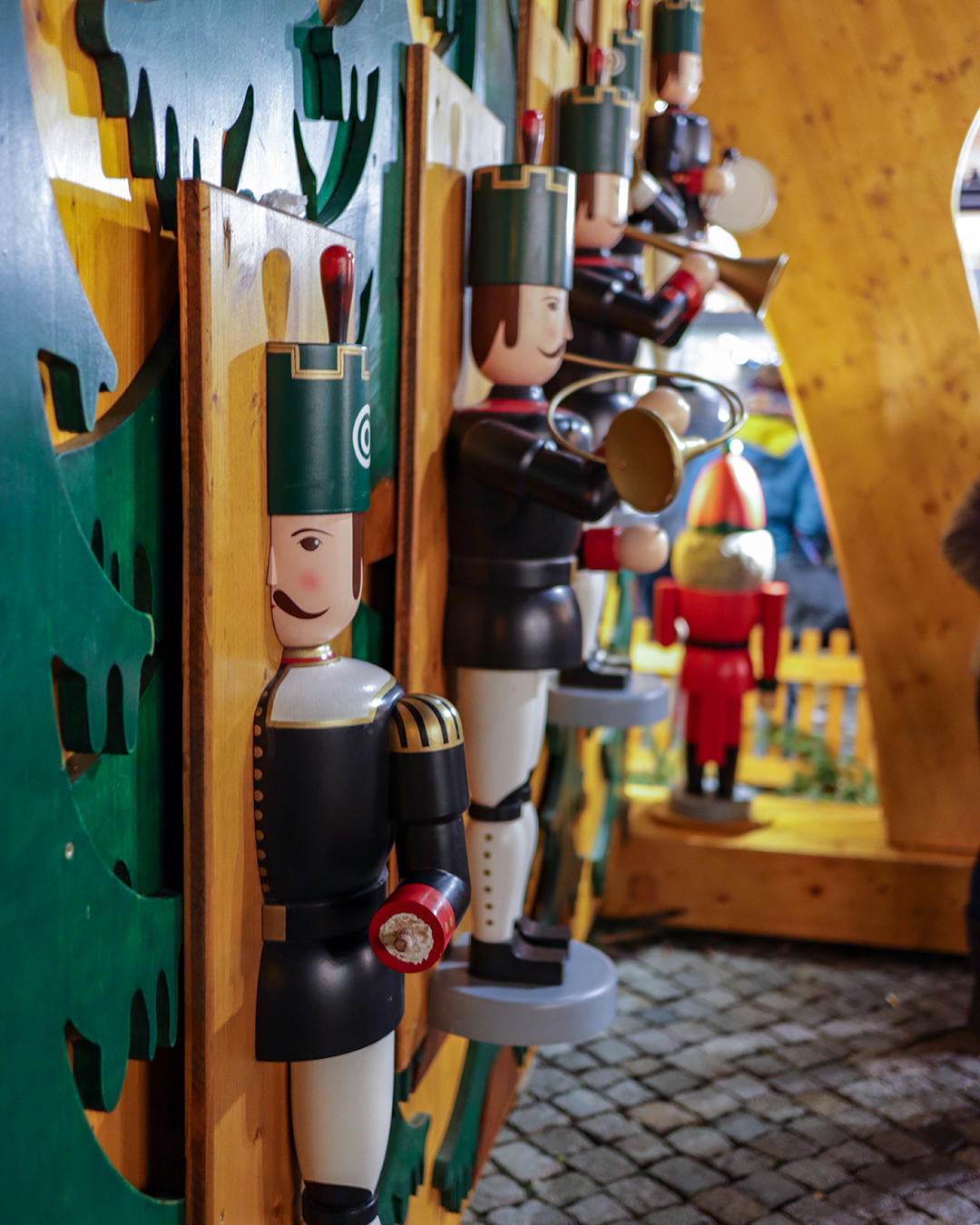
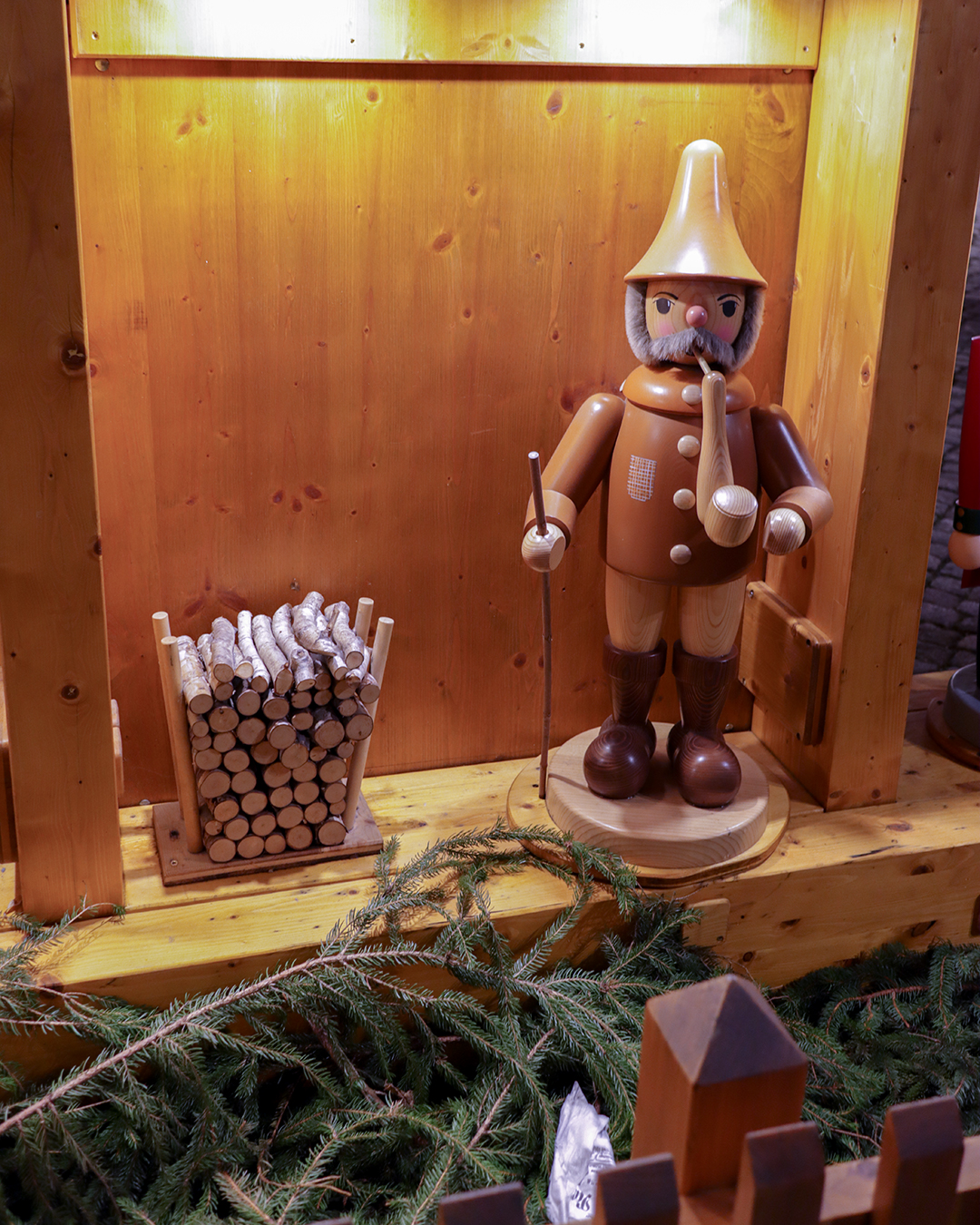
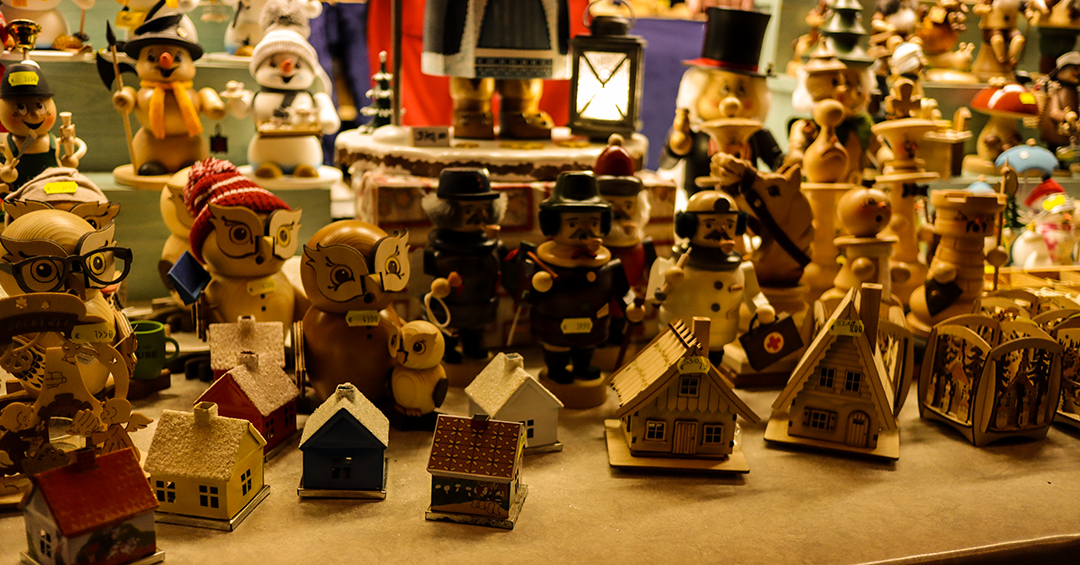
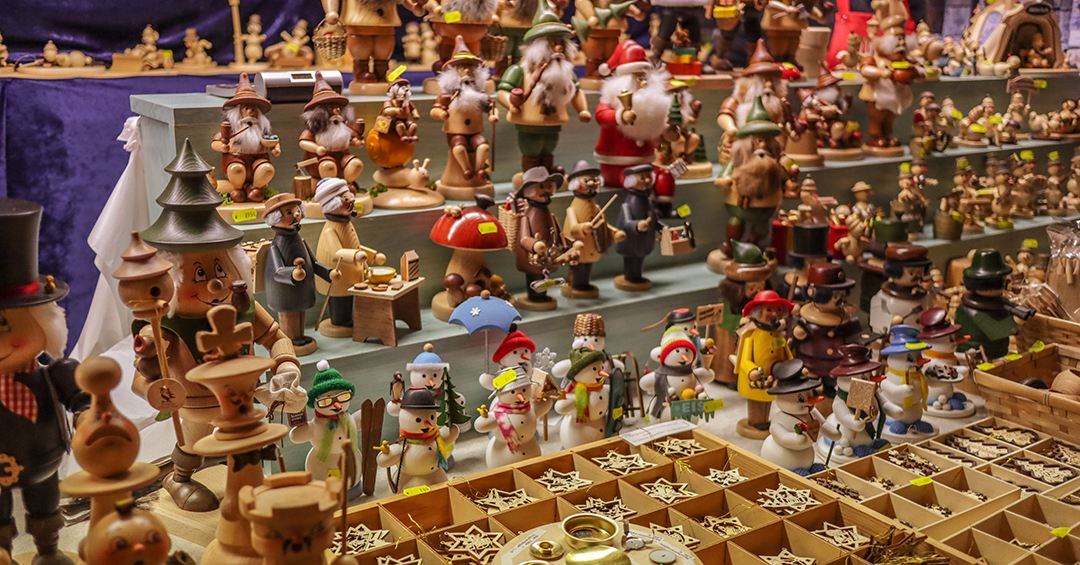
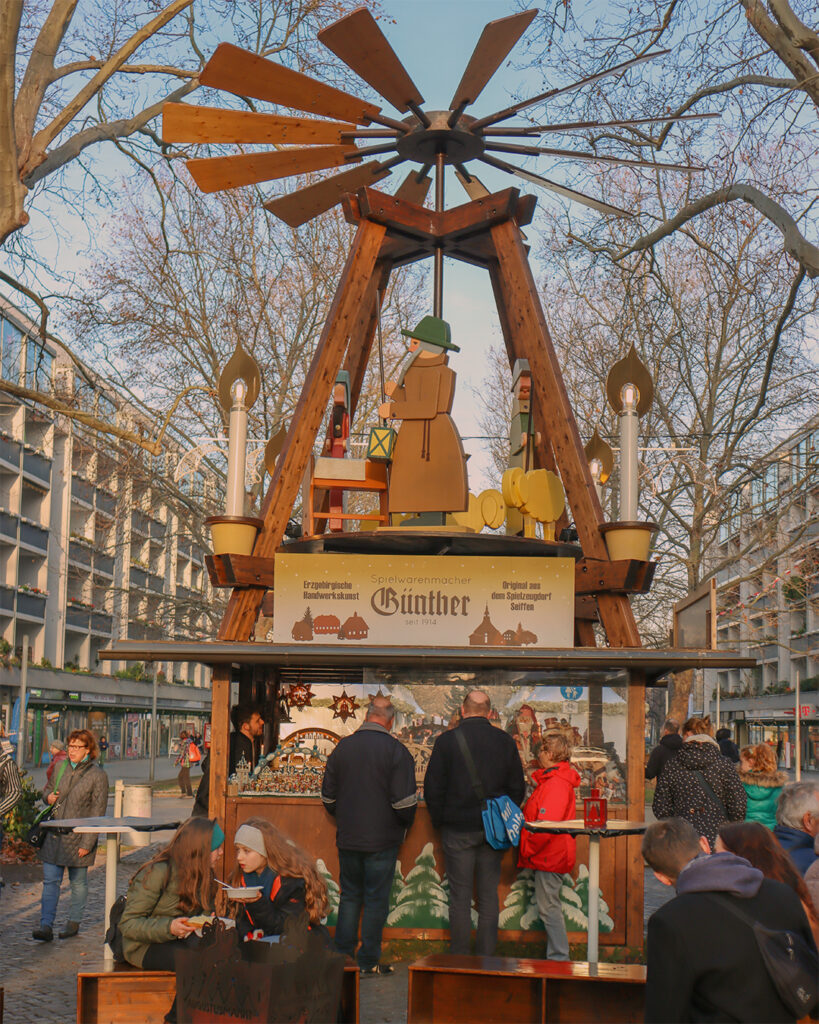
The Striezelmarkt has its own landmarks. At its centre stands the world’s tallest Christmas pyramid, a hand-carved wooden tower more than fourteen metres high, its blades turning slowly above the stalls in the rising heat of the candles. Around it you will find the crafts the Ore Mountains (Erzgebirge) south of the city are famous for: carved wooden nutcrackers, smoking-man incense figures, arched candle lights, and hand-blown ornaments. These are the pieces worth carrying home, handmade and built to last, and worth a little more than the mass-produced decorations you find elsewhere.
Look out too for the Pflaumentoffel, a small chimney-sweep figure made from dried prunes threaded together, with a paper hat and a tiny ladder. It is a Dresden original, a good-luck token and an easy, quirky souvenir you will really only find here.
A suggested two-day itinerary
Dresden’s old town is compact and almost entirely walkable, and its markets are clustered within a few minutes of one another. Two unhurried days is enough to see the best of it.
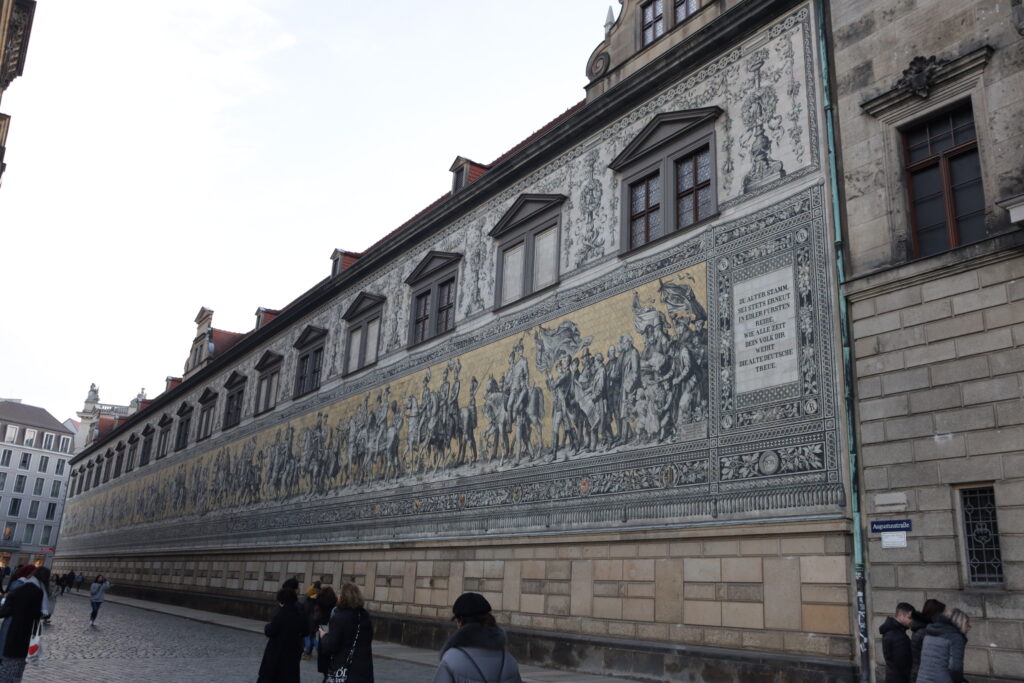
Day one: the Striezelmarkt and the old town. Start at the old market square in the late afternoon, when the light is going and the stalls begin to glow, and do a slow first loop with no agenda beyond a cup of mulled wine and a look at everything. From there it is a short walk to the New Market (Neumarkt), where a second market spreads out beneath the Church of Our Lady. Step inside the church if it is open; the calm under that great rebuilt dome is a fine contrast to the crowd outside. Round off the evening along the Procession of Princes (Fürstenzug), a hundred-metre mural of Saxon rulers made from some twenty-three thousand porcelain tiles from Meissen and the largest porcelain artwork in the world, then out onto Brühl’s Terrace, the raised riverside walk they call the “Balcony of Europe,” for the view over the dark Elbe.
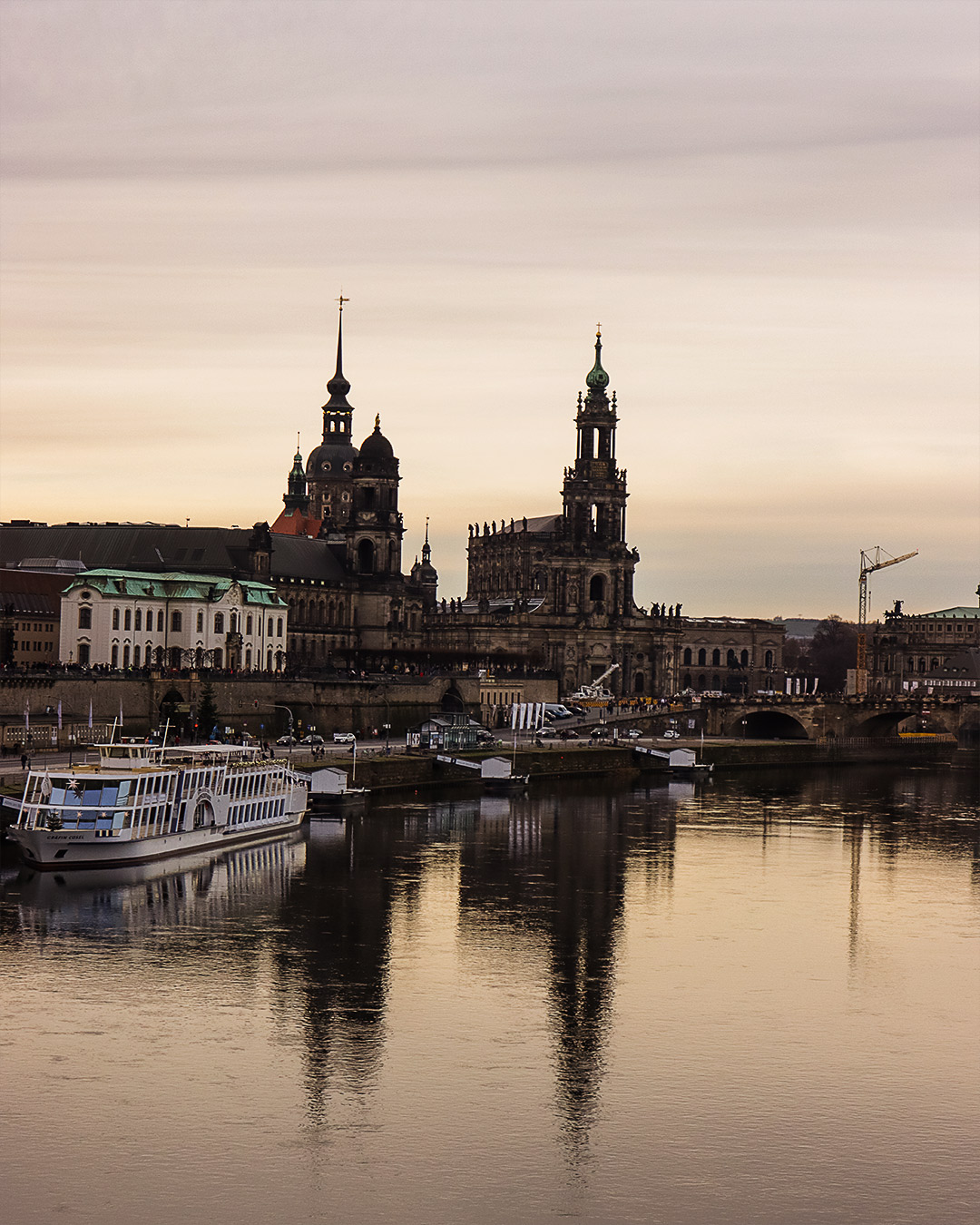
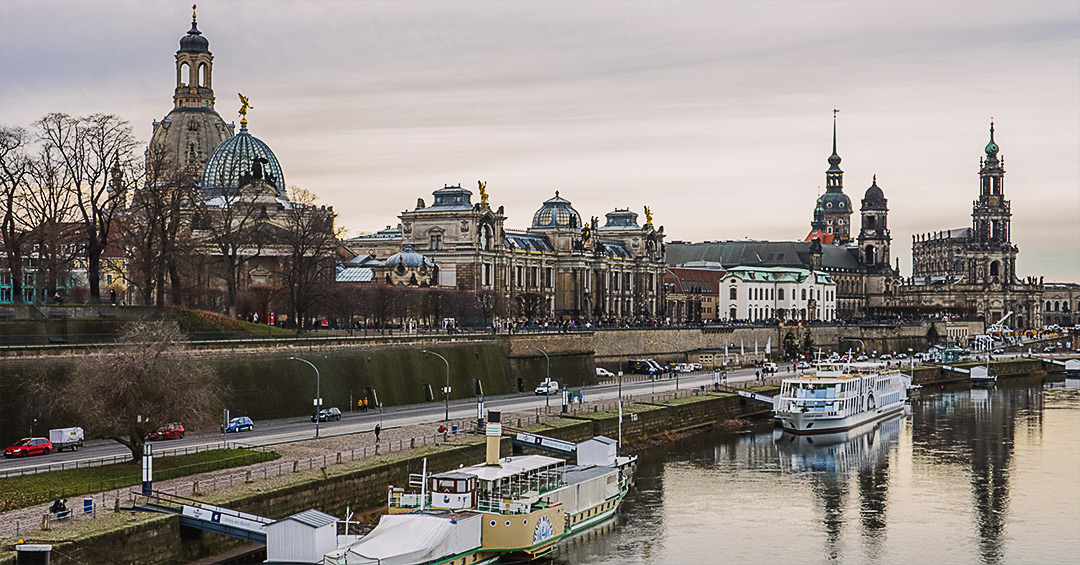
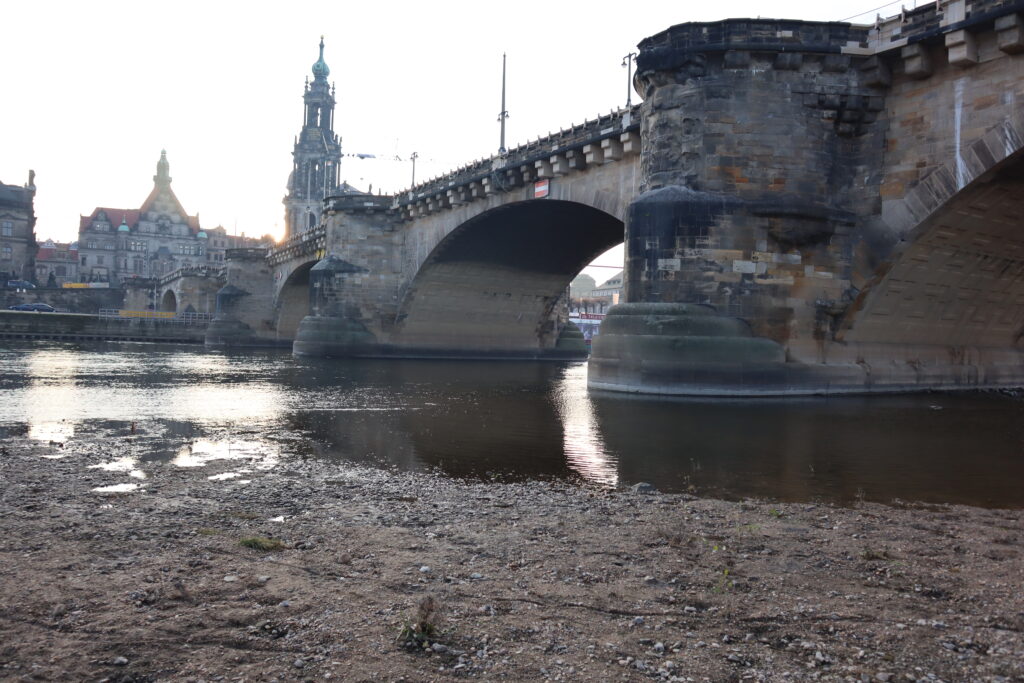
Day two: the palace, the Zwinger, and the New Town. Spend the morning at the royal palace, whose inner courtyard, the stable court (Stallhof), hosts the city’s medieval Christmas market. In the afternoon, walk over to the Zwinger, the baroque garden palace, and past the opera house on Theatre Square (Theaterplatz). If you want more market, cross the Augustus Bridge (Augustusbrücke) over the Elbe into the New Town (Neustadt), where the Augustusmarkt runs for half a kilometre along the main street with a young, international feel and a Ferris wheel at the Golden Rider statue (Goldener Reiter) that looks back over the old town. If you would rather slow down, a winter cruise on one of the historic Elbe paddle steamers gives you the skyline from the water.
The medieval market in the stable court
Of all Dresden’s markets, the one in the stable court is the one I would not skip. It sits inside the old stable courtyard of the royal palace, walled on every side, and it trades on the Middle Ages rather than on Christmas: stallholders in costume, craftspeople working leather and iron and glass by hand, food cooked over open fire, wine warmed in the same, and wooden hot tubs steaming in the cold. In the evening light projected onto the palace walls, it is easily the most atmospheric corner of the city. Come after dark for the full effect.
The places worth your time
- The Striezelmarkt. Germany’s oldest Christmas market and the heart of Dresden’s Advent, on the old market square, with the giant wooden pyramid at its centre. Free to enter.
- The market on the New Market. Set beneath the Church of Our Lady, with stalls built to look a century old and craftspeople working in the guild tradition. The prettiest backdrop of the lot.
- The medieval market in the stable court. The walled palace courtyard turned over to costume, firelight, and handmade crafts. The city’s most atmospheric market after dark.
- The Church of Our Lady. Destroyed in 1945 and rebuilt from the rubble, reopened in 2005, and now the symbol of the city. Step inside for the quiet, or climb the dome for the view.
- The Zwinger and the opera house. The baroque palace and the opera house on Theatre Square, floodlit and photogenic on a winter evening.
- The Procession of Princes. The vast porcelain-tile mural running the length of the palace wall. Worth a slow walk past.
- The Augustusmarkt. Dresden’s lively second market across the river in the New Town, with international food, a Ferris wheel, and a younger crowd.
What to eat and drink
You will not go hungry, and much of the pleasure of the market is eaten standing up with cold hands.
- Dresden Christmas loaf (Stollen). The city’s famous Christmas fruit loaf, dense with candied peel and dried fruit, marzipan and rum, and buried under icing sugar. Only bakers from Dresden may sell it under the protected name, and a proper one keeps for weeks, so it travels home well and makes an easy gift.
- Pflaumentoffel. Not food exactly, but the little dried-prune chimney-sweep figure is a Dresden tradition worth carrying home.
- Spiced gingerbread from Pulsnitz (Pfefferkuchen). Soft gingerbread from the town of Pulsnitz just outside Dresden, made to old guild recipes and sold across the markets.
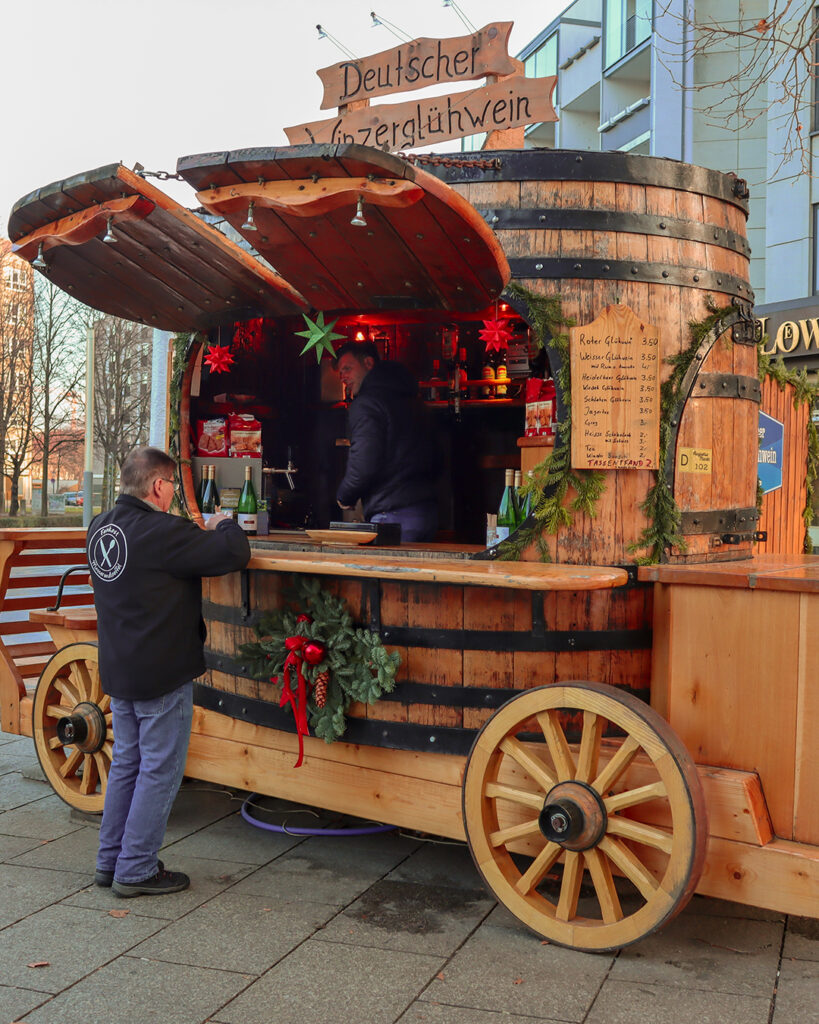
- Mulled wine and Feuerzangenbowle. Mulled wine is the standard. Feuerzangenbowle is its dramatic cousin, made by setting a rum-soaked sugar loaf alight over the punch. You pay a small deposit for the mug and get it back when you return it, or keep the mug as a souvenir.
- Dresden layer cake (Eierschecke). A local three-layer cake of shortcrust, quark, and a set custard top. A good sit-down warm-up in a café off the square.
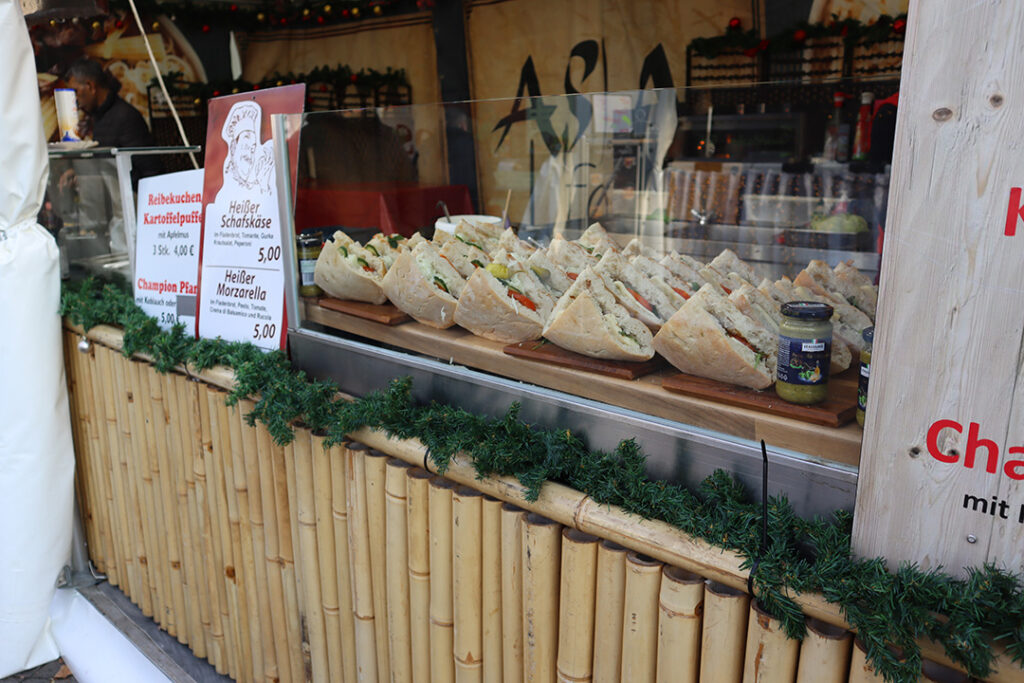
- Saxon plates and roasted almonds. For something heartier, look for pot roast (Sauerbraten) with red cabbage and dumplings in the taverns, and pick up a paper cone of roasted almonds to walk with.
A note for vegetarian and Indian travellers: the market is meat-heavy, and I will be honest, the vegetarian pickings at the stalls thin out quickly once you get past the sweet things. The Christmas loaf and gingerbread, the roasted nuts, the potato specialities, and the mulled drinks are all easy, and Dresden’s plant-based choices have grown in recent years. I did try an Indian restaurant in town and found it forgettable, and more than once I simply fell back on a plain veg burger from the McDonald’s near the station. Not glamorous, but if you are travelling vegetarian it helps to know the reliable fallback is right there when the cold sets in.
A word on the Stollen Festival
If you can time your trip around one day, make it the Stollen Festival (Stollenfest), held on the Saturday before the second Advent Sunday. A giant Christmas loaf weighing several tonnes is drawn through the old town on a horse-drawn cart, escorted by bakers and the Stollen Maiden, and cut on the old market square with a ceremonial knife over a metre long. The slices are then sold off for charity. It is theatrical and a little old-fashioned, and it works. In 2026 the festival falls on 5 December.
Advent concerts
Dresden takes its music seriously, and Advent is the season for it. The city’s famous boys’ choir (Kreuzchor), attached to the Church of the Holy Cross (Kreuzkirche), has been singing here for around eight hundred years, and its Advent and Christmas vespers are among the finest things you can do indoors in the city. The Church of Our Lady and the Church of the Holy Cross both hold concerts and services through December; look up the programme and book ahead, as the good evenings sell out.
Planning your visit: the practical details
- When to go. The Striezelmarkt runs from 26 November to 24 December 2026, open daily from 10 a.m. to 9 p.m., with a shorter day on Christmas Eve (10 a.m. to 2 p.m.). Several of the other markets, including the one on the New Market and the New Town market, run on into early January, so a visit between the last week of November and Christmas Eve gives you everything at once. The Striezelmarkt closes on Christmas Eve and does not run through to New Year, so plan your dates accordingly.
- How to get there. Dresden is well connected by train. Berlin is about two hours away, Prague around two and a quarter, Leipzig a little over an hour. Dresden’s own airport sits about nine kilometres north of the centre and connects to the old town by suburban train. For long-haul flights from India, the easiest hubs are Frankfurt, Munich, or Berlin, with a short domestic hop or a direct train on to Dresden.
- Getting around. You will mostly walk; the old town is small and the markets are all within a few minutes of each other. For anything further, Dresden has an excellent tram and bus network. Buy single tickets from the machines at the stops, and carry some cash, since a few of the smaller market stalls still prefer it for small purchases.
- Where to stay. Stay in or right beside the old town, within reach of the old market square and the New Market. Being able to step out into the market in the evening and back to a warm room minutes later makes all the difference. Book early: Dresden fills up fast in December and the good central hotels go first.
- What to pack. Dresden in December is genuinely cold, often near or below freezing, sometimes with snow. Dress in warm layers, bring a proper coat, and wear waterproof shoes with good grip for the cobbles. You will be standing outside in the evenings, so warmth beats style.
- Timing and crowds. Weekend afternoons and evenings are shoulder-to-shoulder, and the Stollen Festival draws big numbers. If you can, visit on a weekday, and arrive at the market in the late afternoon to catch both the last of the daylight and the lights coming on.
- The visa. Germany is part of the Schengen area, so Indian travellers will need a Schengen visa. December is peak season and appointment slots get booked out well in advance. Start the process early. The paperwork and the timing are exactly the kind of thing worth getting right before you book flights.
A last word
Dresden at Christmas is not a hidden secret, and you will feel it on a Saturday evening on the old market square. But few places wear the season as well as this one. Stand under the turning pyramid with a warm mug in your hands while the Church of Our Lady is lit up over the rooftops, and you will understand what has kept people coming back for nearly six hundred years. When my train paused here again a year later, I found myself wishing I had time to step out and do it all over.
If you are planning a German Christmas trip and want help with the Schengen visa or the logistics around it, that is exactly what we do at Jaunt Planners. Get in touch and we will help you get there.