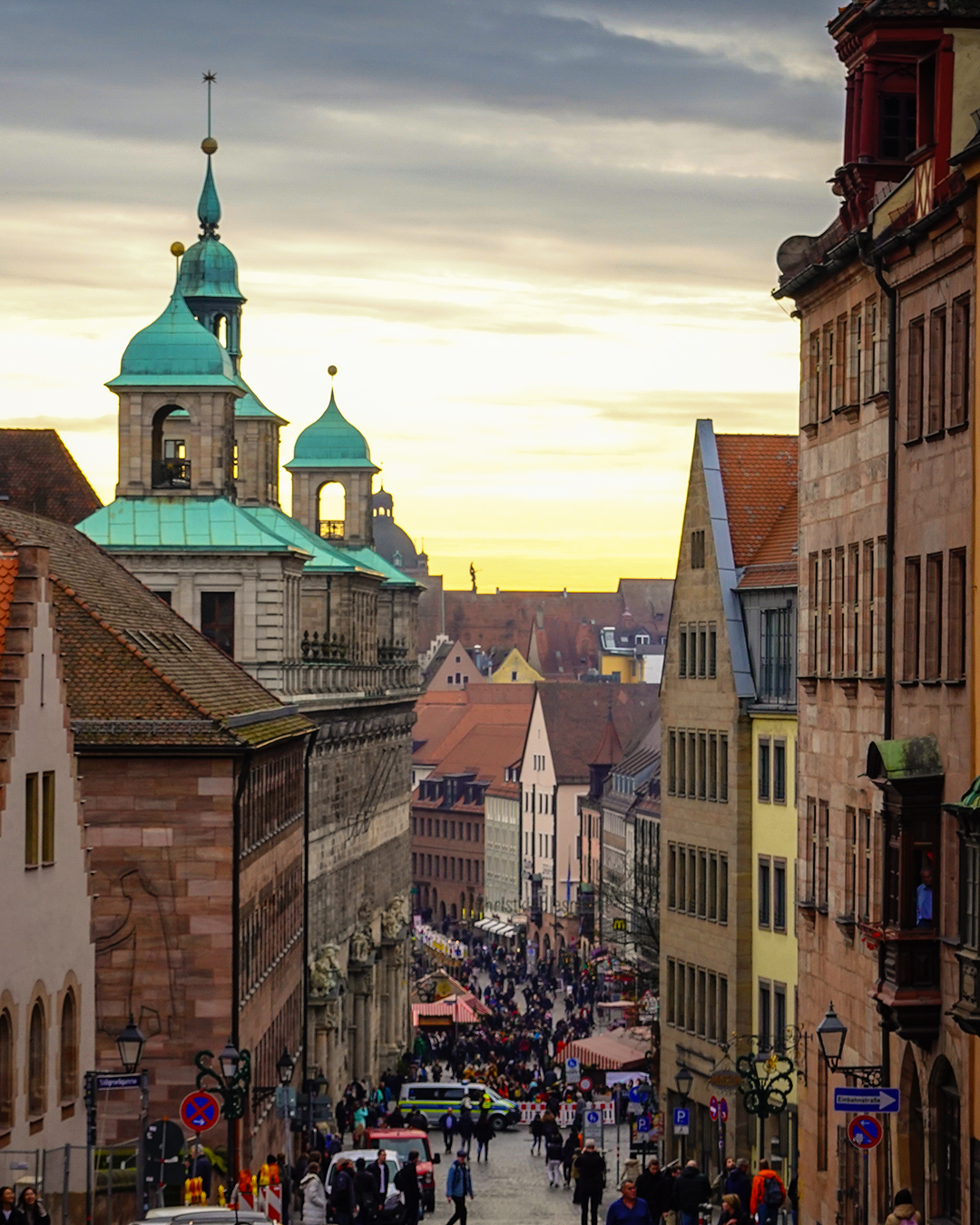
I have been to Nuremberg twice, both times in the run-up to Christmas, and both times I arrived by train. Once it was the DB service down from Cologne, once a train across from Vienna. There is something fitting about stepping off at Nuremberg Hauptbahnhof, walking a few minutes north through the old city gate, and having the smell of roasting almonds and mulled wine reach you before the market does.
If you only ever visit one Christmas market in Germany, make it this one. Nuremberg’s Christkindlesmarkt is among the oldest and most famous in the world, and it has kept its character in a way few others have. This is a practical, been-there guide to what to see, what to eat, and how to plan the trip, written mainly for Indian travellers weighing up a European winter break.
What makes Nuremberg’s Christmas different
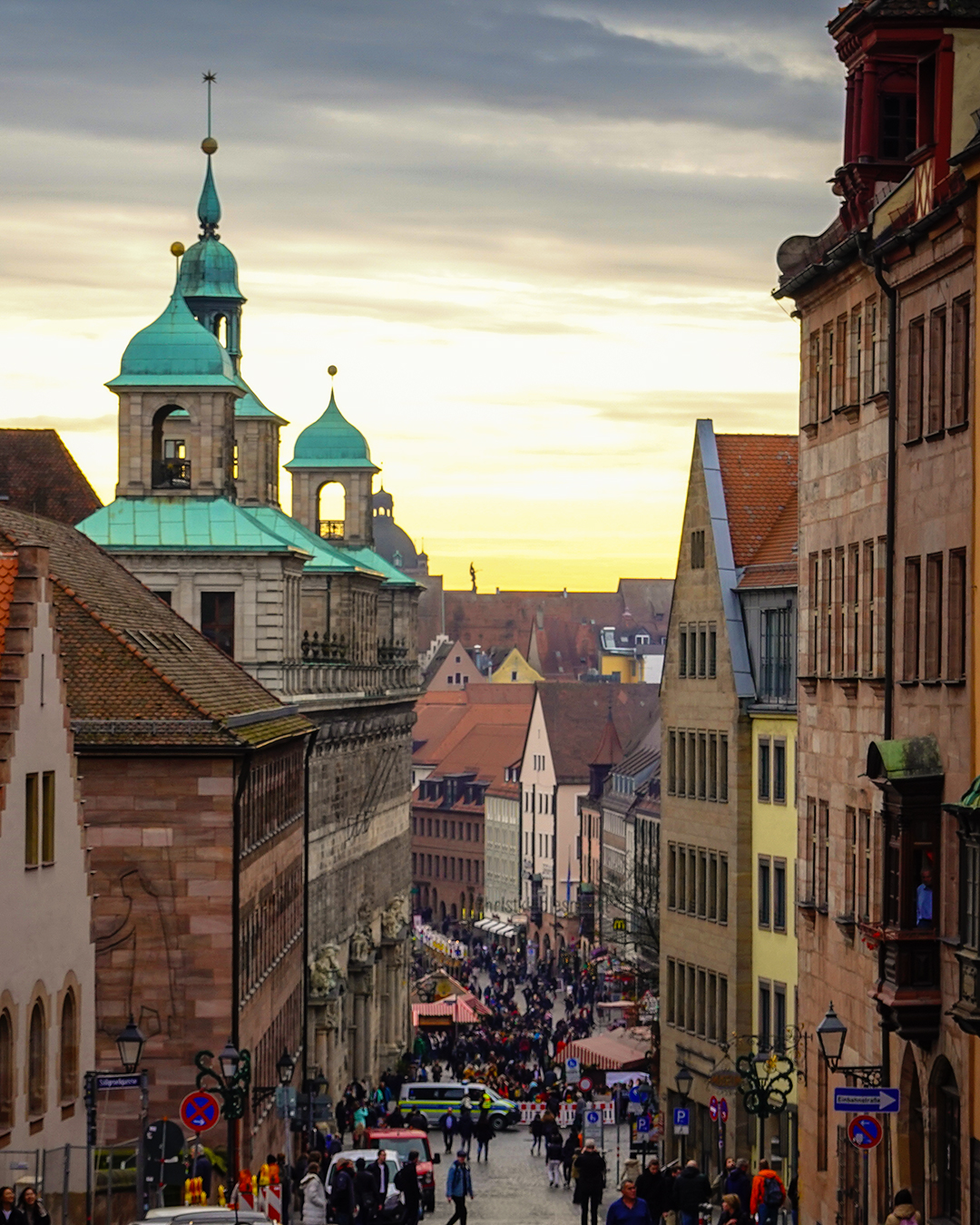
Most German cities put up a Christmas market but come nothing comes close to Nuremberg. The main market sits on the Hauptmarkt, the old central square, and fills it with around 180 wooden stalls, all roofed in the same red-and-white striped cloth. Locals call it “the little town of wood and cloth,” and the description holds up: for four weeks the square becomes a small city of its own.
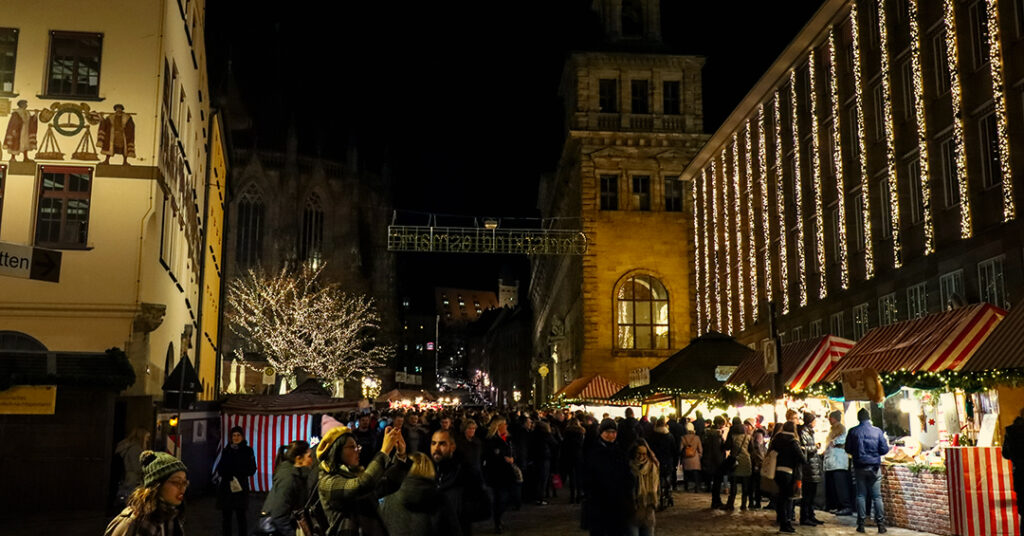
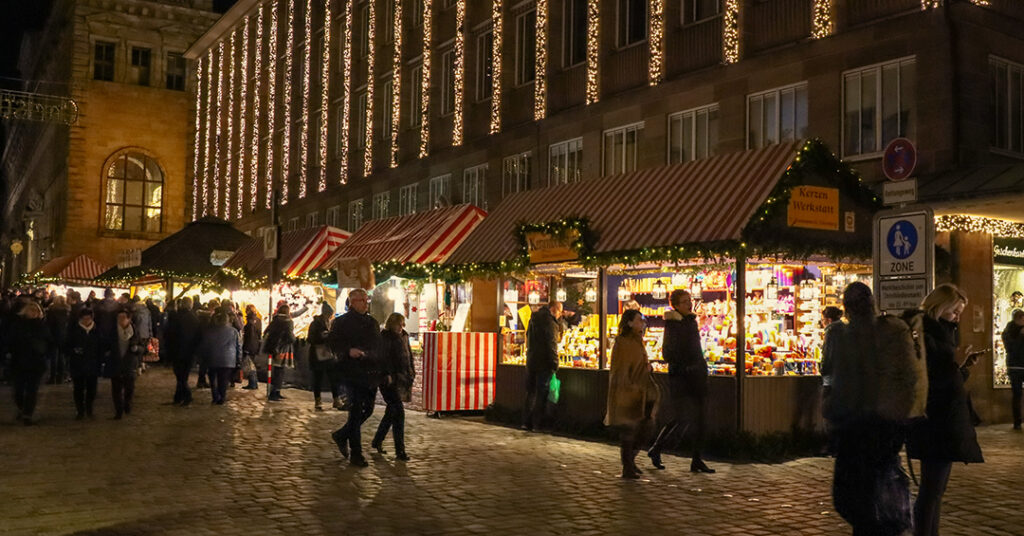
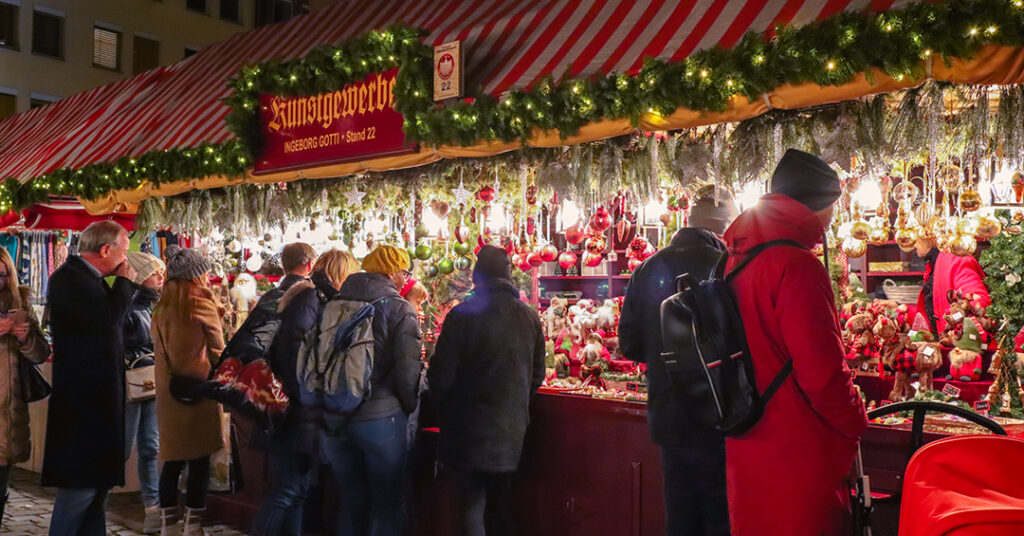
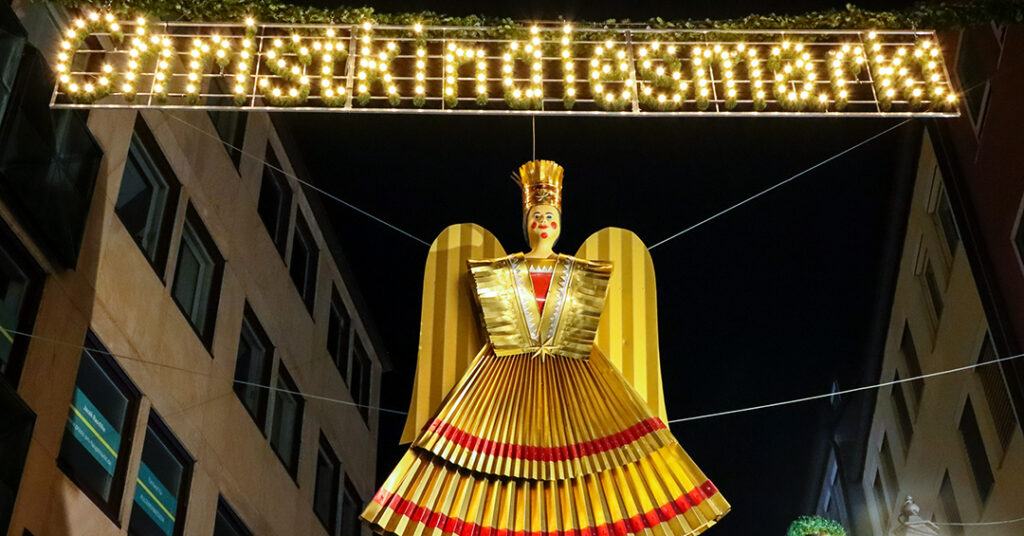
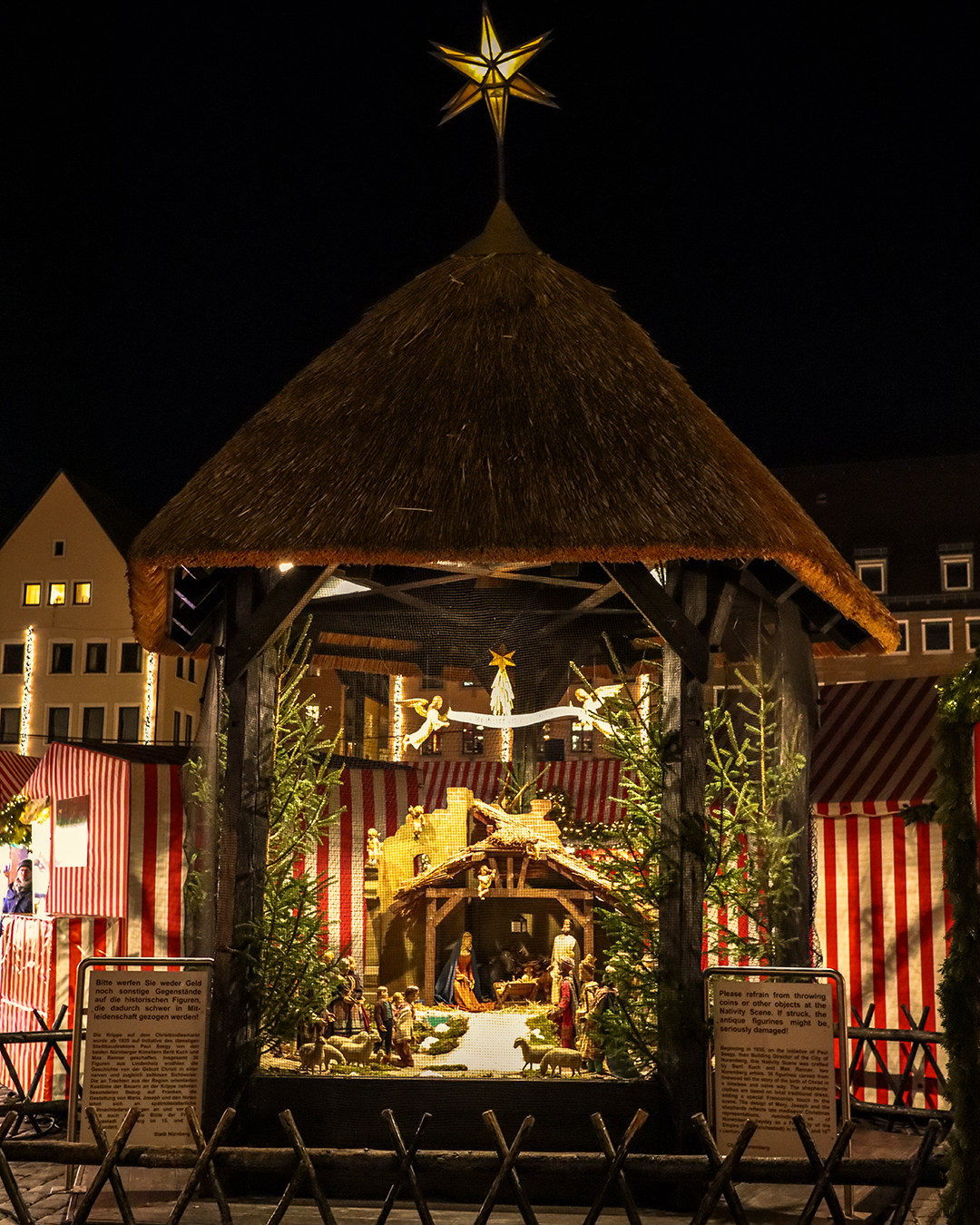
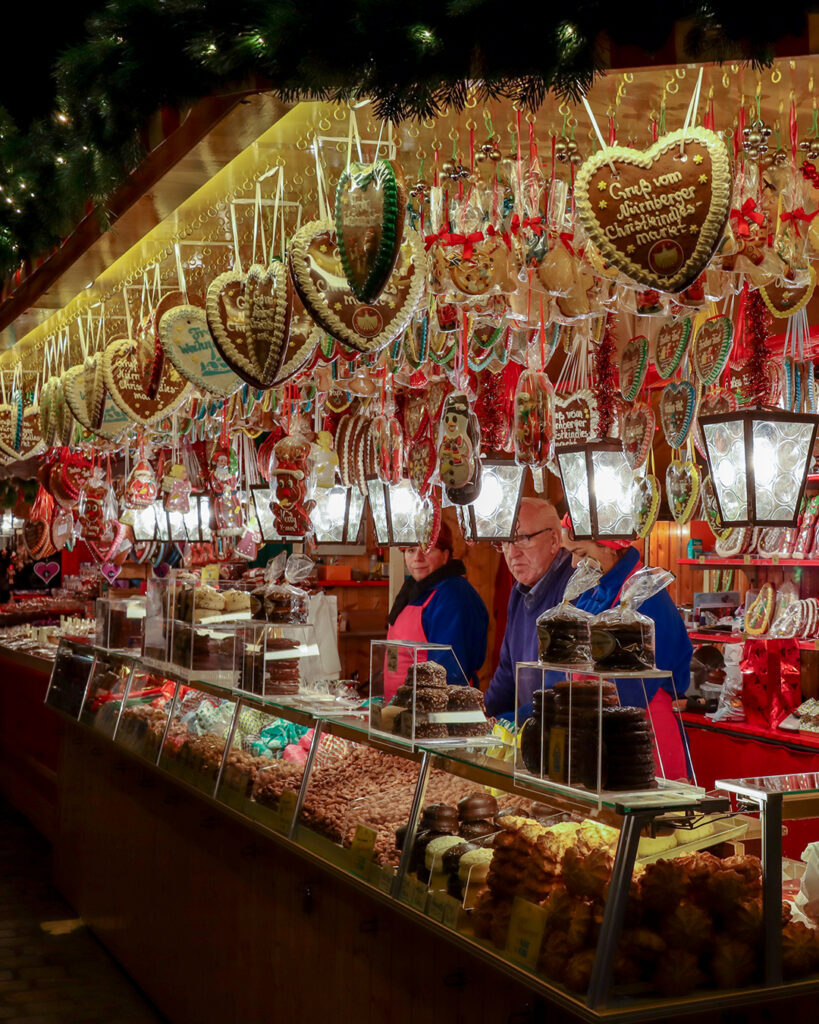
The market also has rules that keep it honest. Mass-produced plastic decorations are not allowed, so what you find instead is the real thing: hand-blown glass baubles, carved wooden nutcrackers, gold-foil angels, nativity figures. It costs a little more than the tat you will find at some other markets. You are buying something made, not moulded.
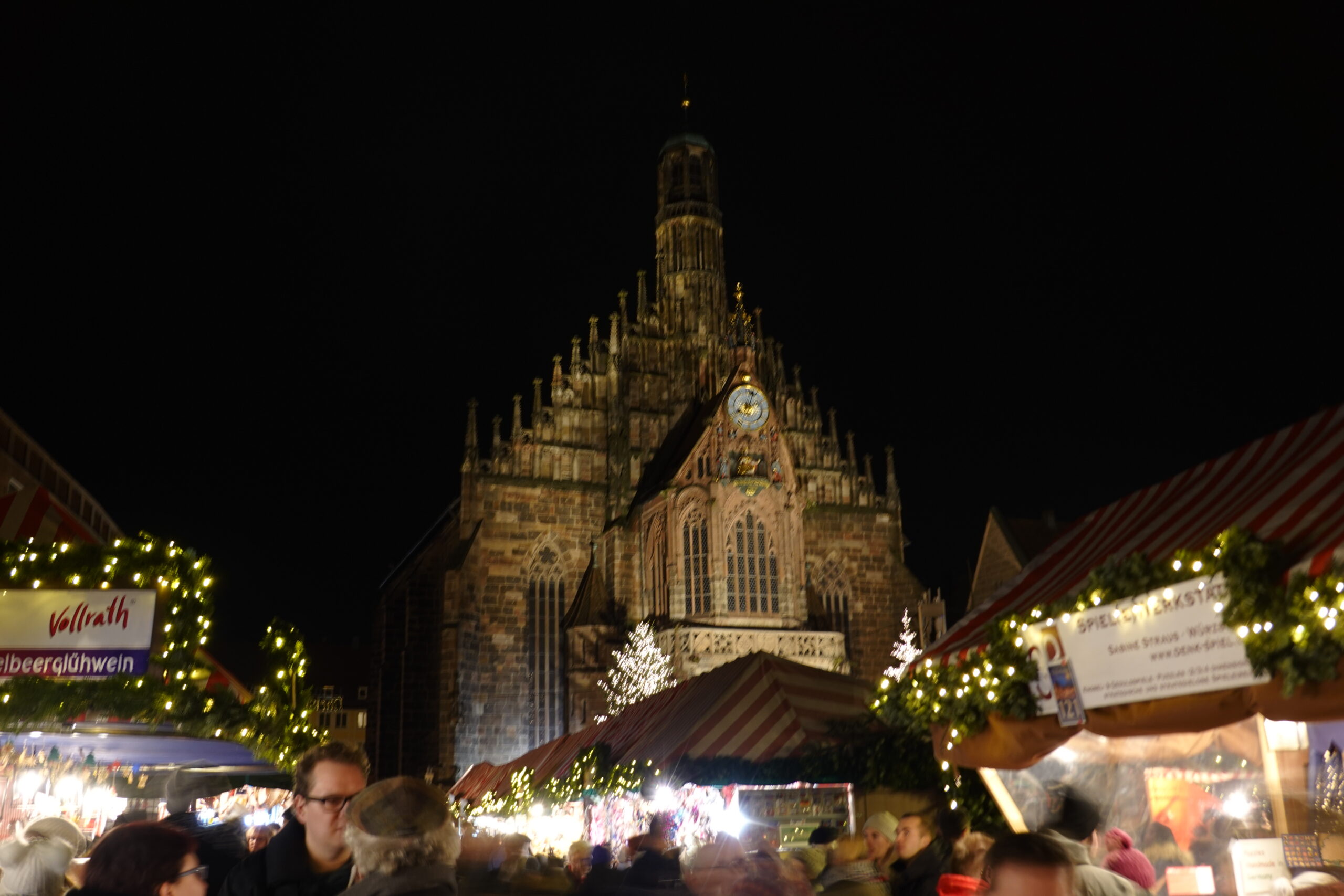
The season opens with a ceremony worth timing your trip around. Every two years the city elects a young Nuremberger, a girl aged sixteen to nineteen, to serve as the *Christkind*, the Christmas Child. On the opening evening she stands on the balcony of the Frauenkirche, the church at the head of the square, and recites a prologue to declare the market open. Her opening line has stayed the same for generations, an invitation for grown men and women who were once children to be young again. It is theatrical and a little old-fashioned, and it works. She reappears at the market through the season too, so children get more than one chance to see her.
A suggested two-day itinerary
Nuremberg’s old town is compact and almost entirely walkable, so two unhurried days is enough to see the best of it.
Day one: the market and the old town. Start at the Hauptmarkt in the late afternoon, when the light is going and the stalls begin to glow. Do a slow first loop with no agenda beyond a cup of *Glühwein* (mulled wine) and a look at everything. Pause at the Schöner Brunnen, the “Beautiful Fountain,” in the corner of t`he square. It is a fourteenth-century Gothic spire nearly twenty metres tall, ringed by a wrought-iron railing. Set into that railing is a seamless golden ring, and the local custom is to spin it and make a wish. From there, wander into the side lanes off the square where the shopfronts and half-timbered houses are decorated, and let the evening take its course.
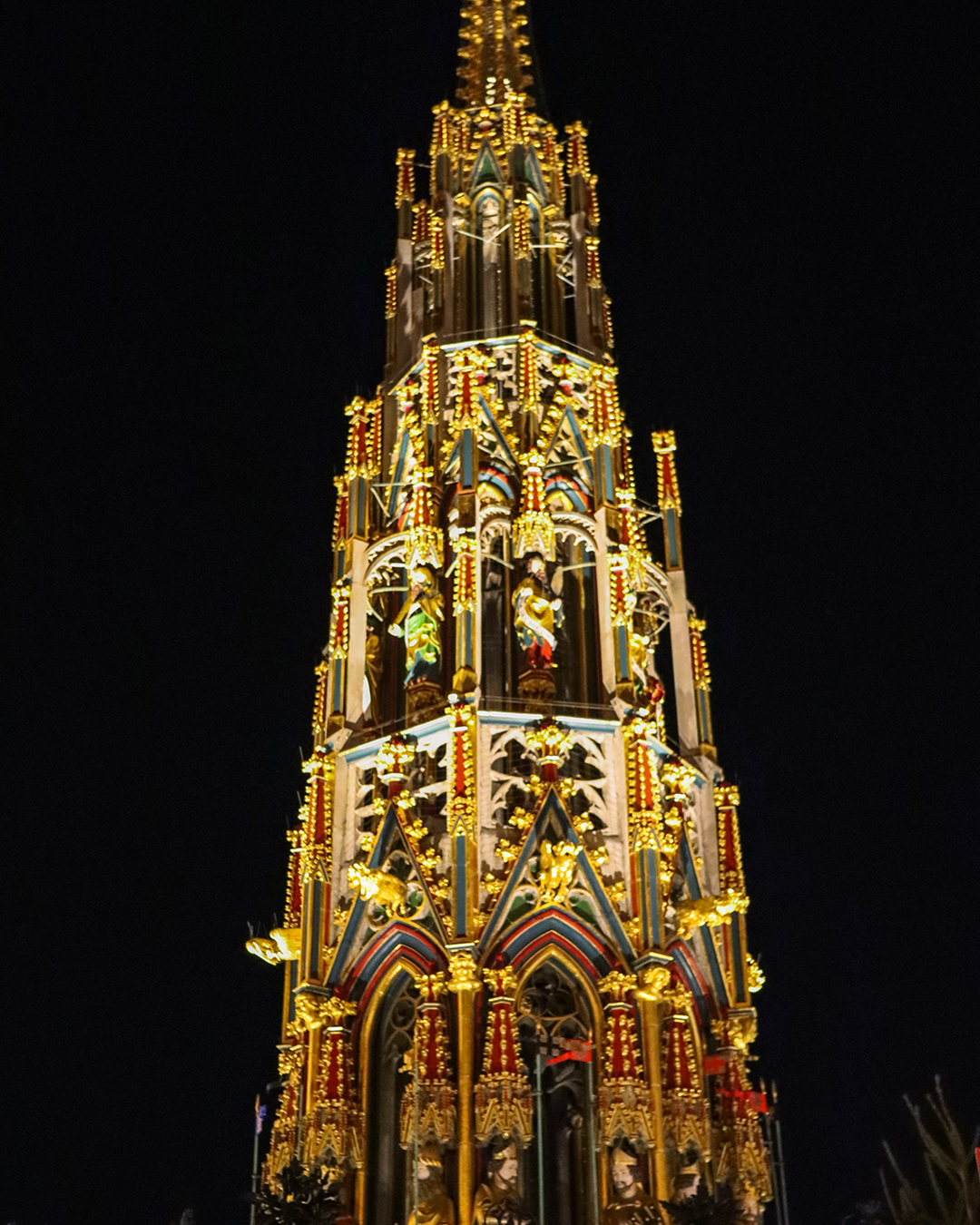
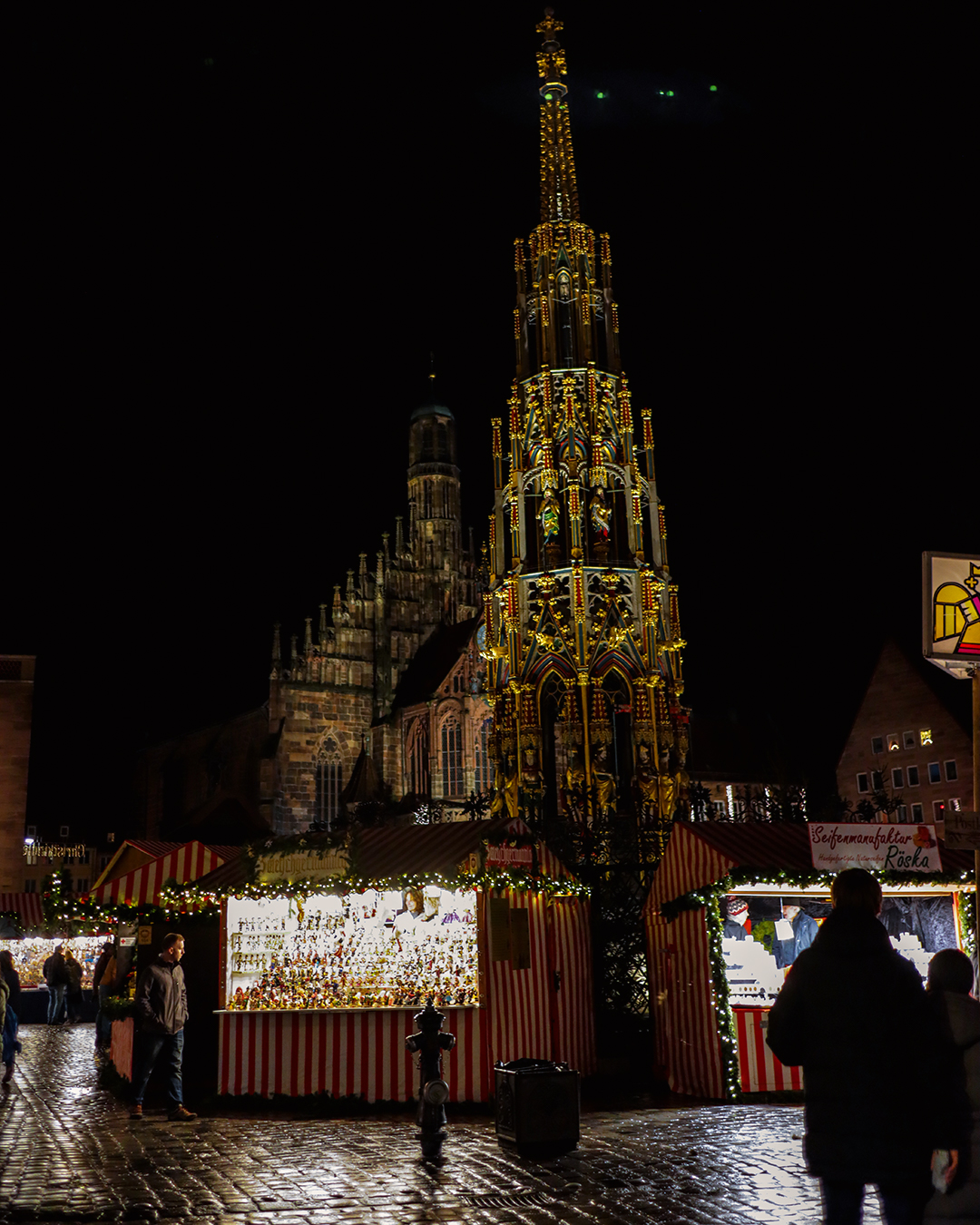
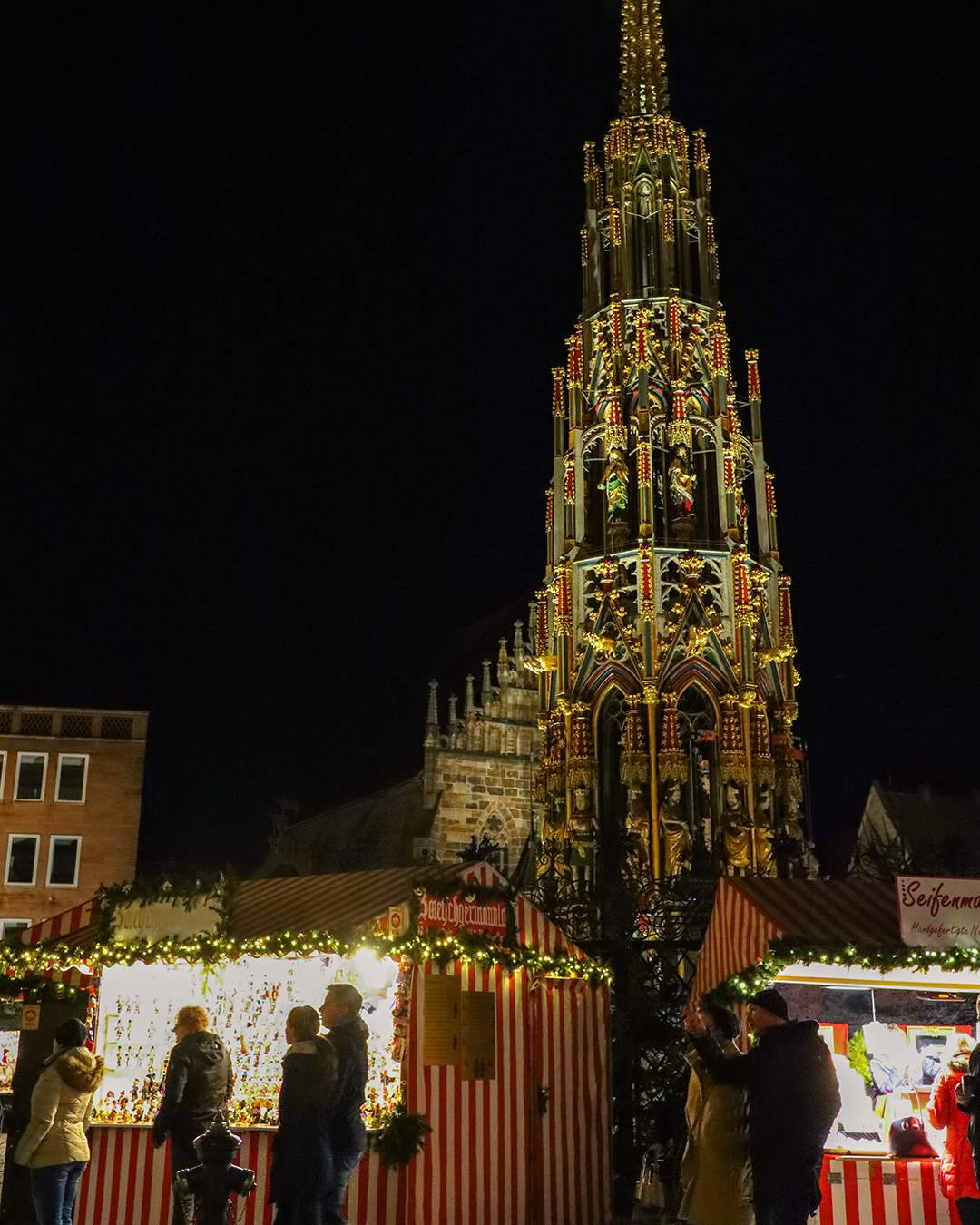
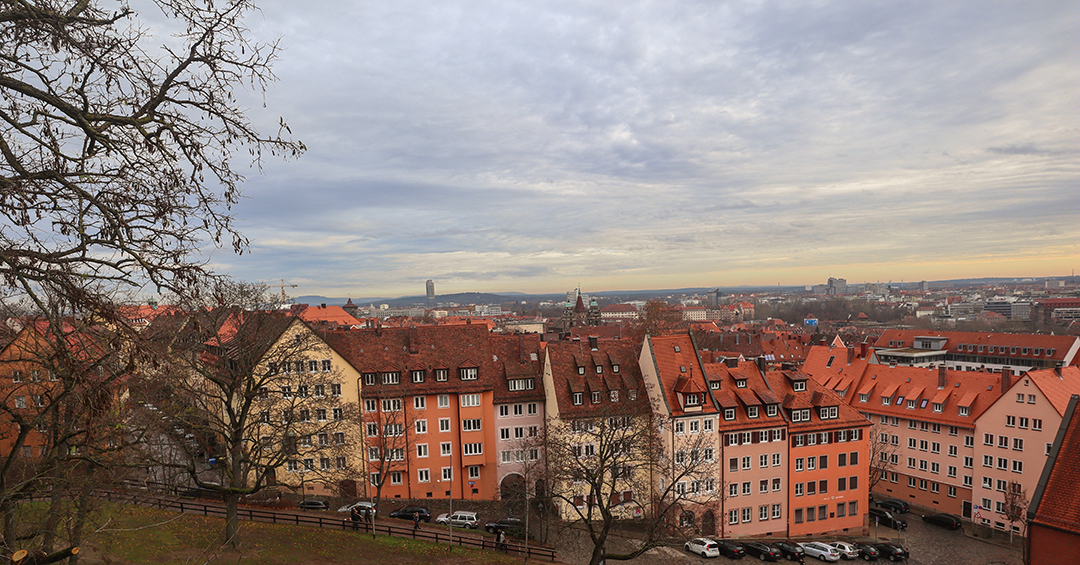
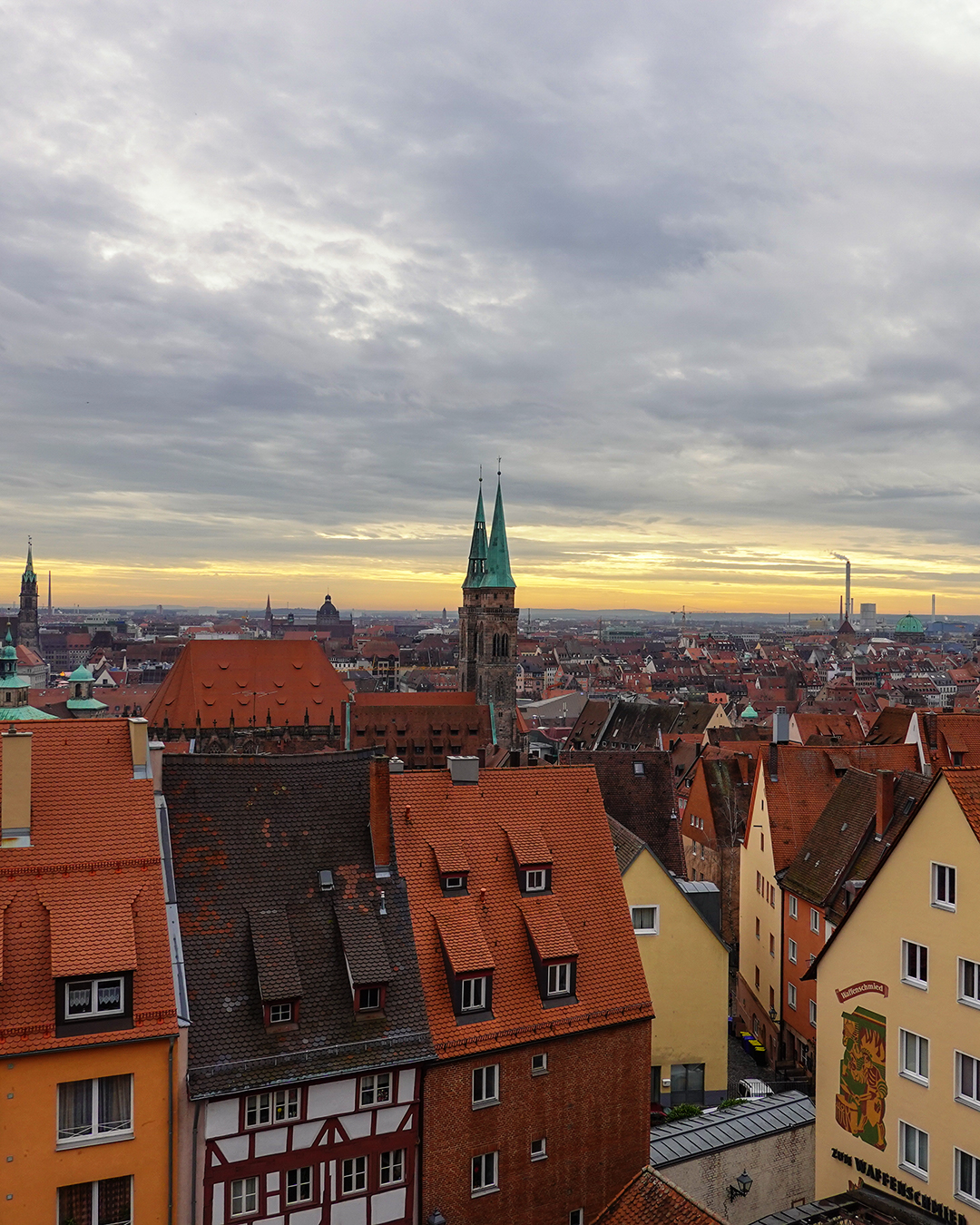
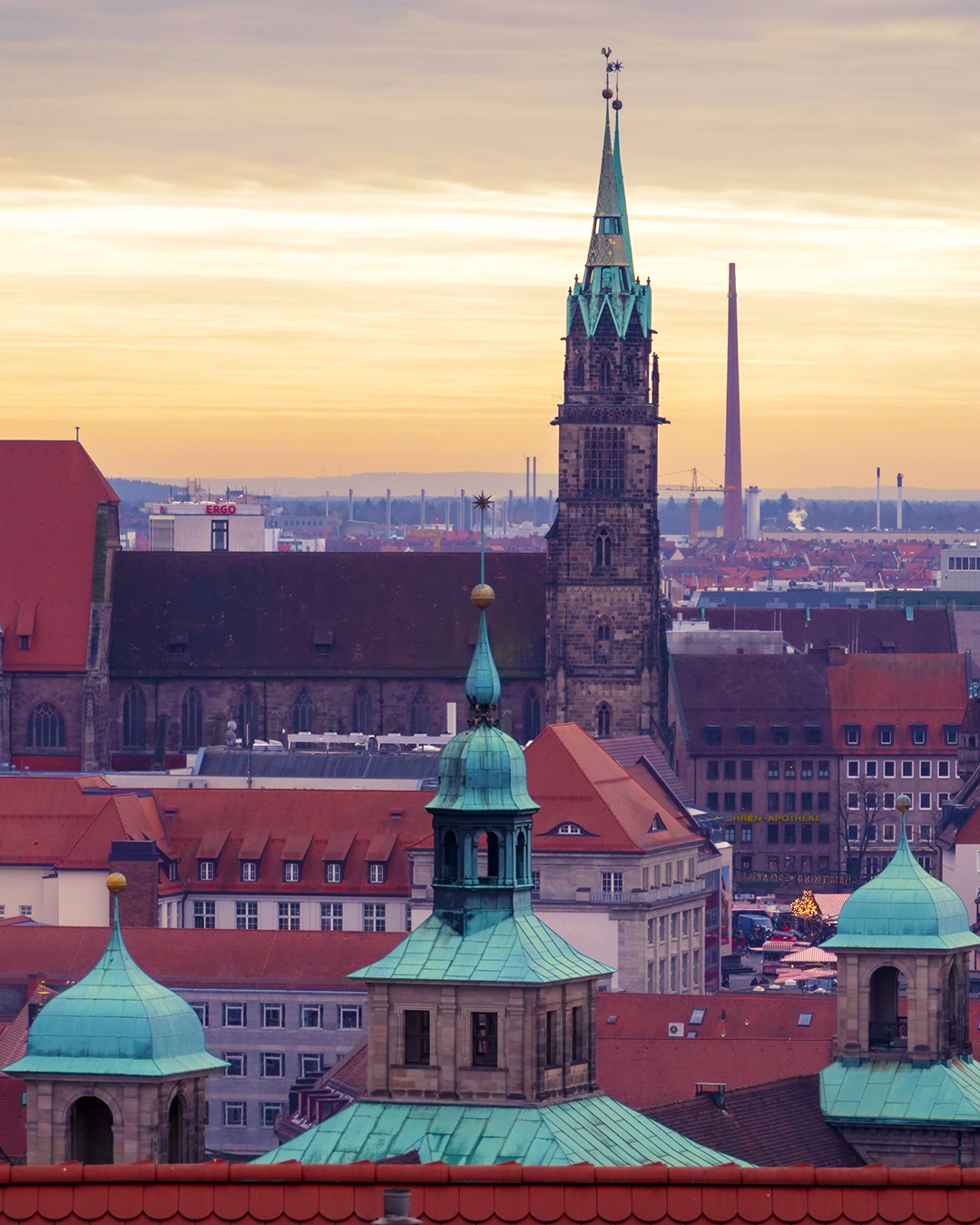
Day two: the castle and the history. Walk up the hill in the morning to the Kaiserburg, the Imperial Castle that crowns the old town. For centuries this was one of the most important fortresses in the Holy Roman Empire, and the climb up to its towers gives you the best view over the red rooftops of the city. In the afternoon, decide what kind of traveller you are. If you want more market, the Children’s Christmas Market and the Sister Cities’ Market are both a short walk away. If you want depth, Nuremberg also carries a heavier twentieth-century history: the Nuremberg Trials courtroom and the former rally grounds can both be visited, and they make a sobering counterpoint to the festive lights.
A day trip to Rothenburg
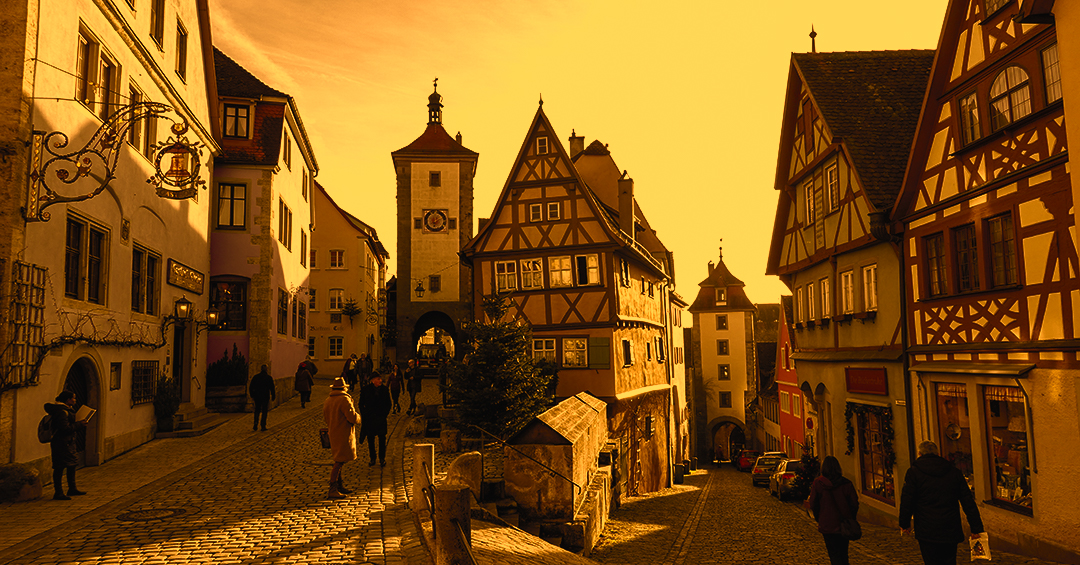
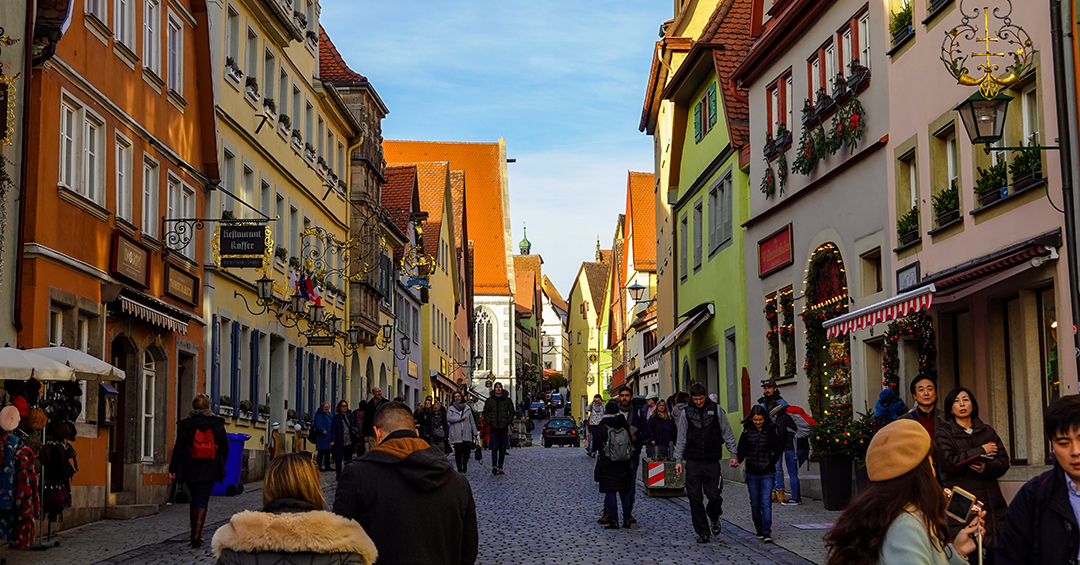
If you have a spare day, take the train out to Rothenburg. There is no direct route, so you will change at Ansbach and then again at Steinach, and the whole trip takes roughly an hour and a half each way. It is worth every minute of the changing platforms: Rothenburg is a walled medieval town that looks almost untouched, with half-timbered houses, cobbled lanes, and its own small Christmas market running through December.
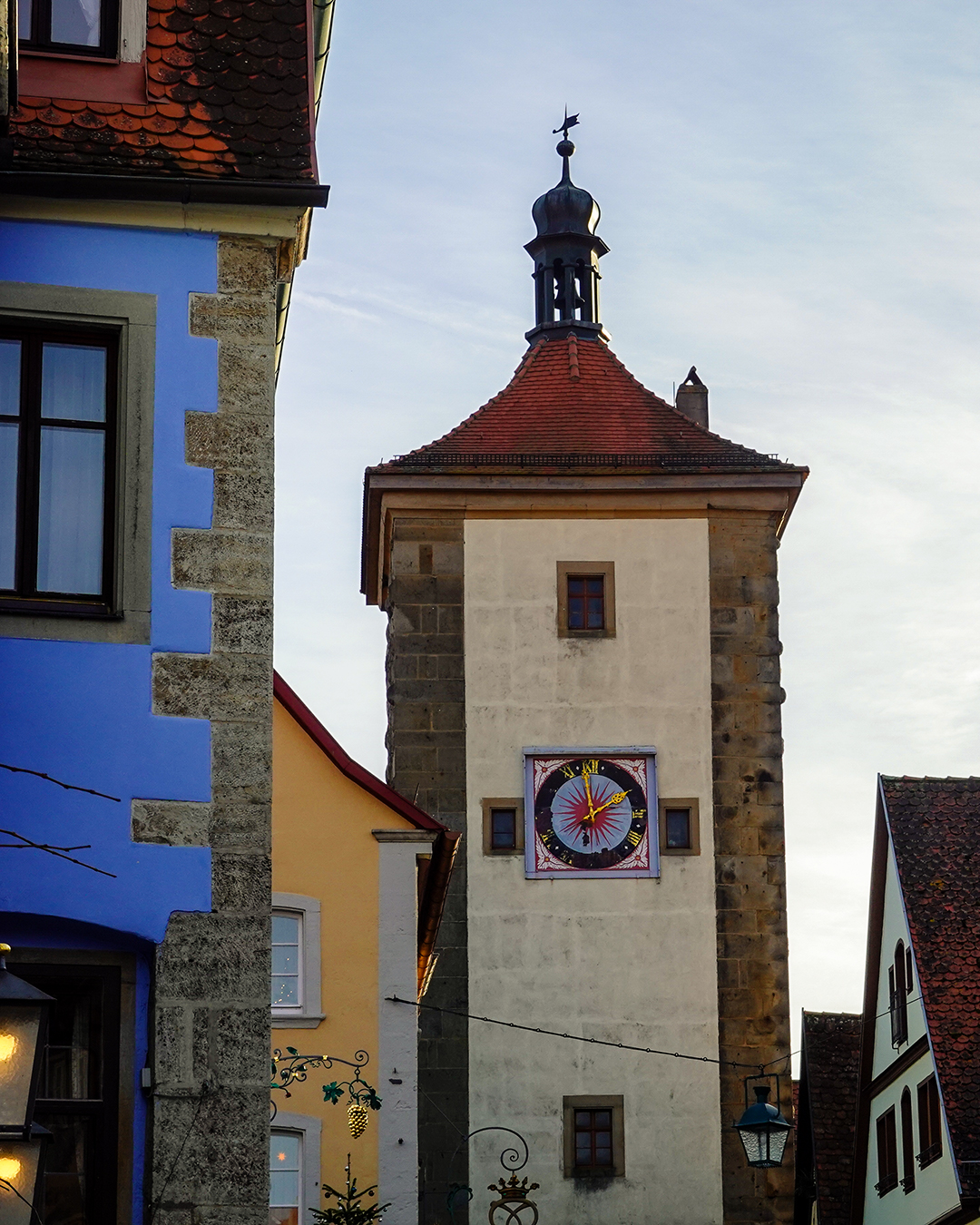
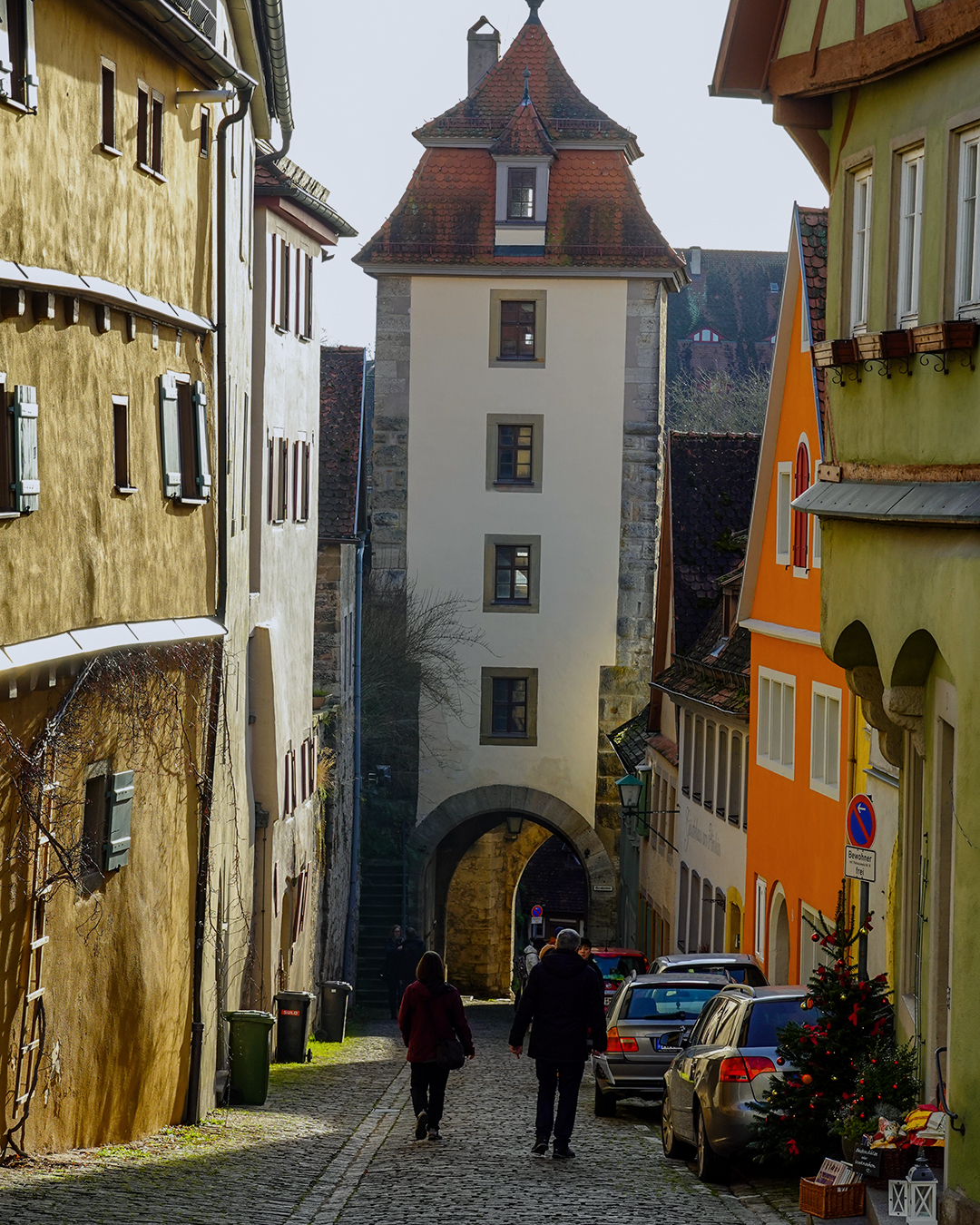
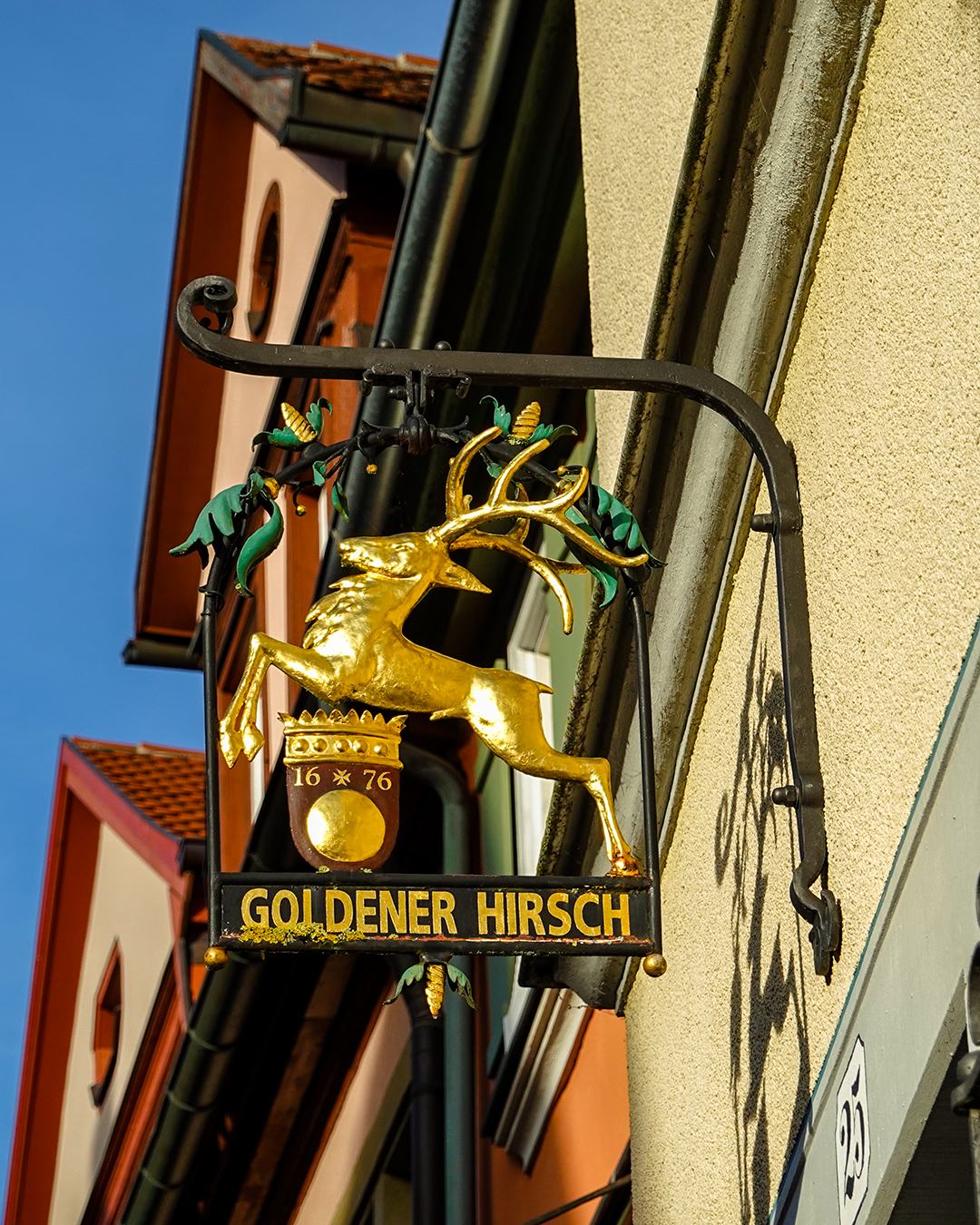
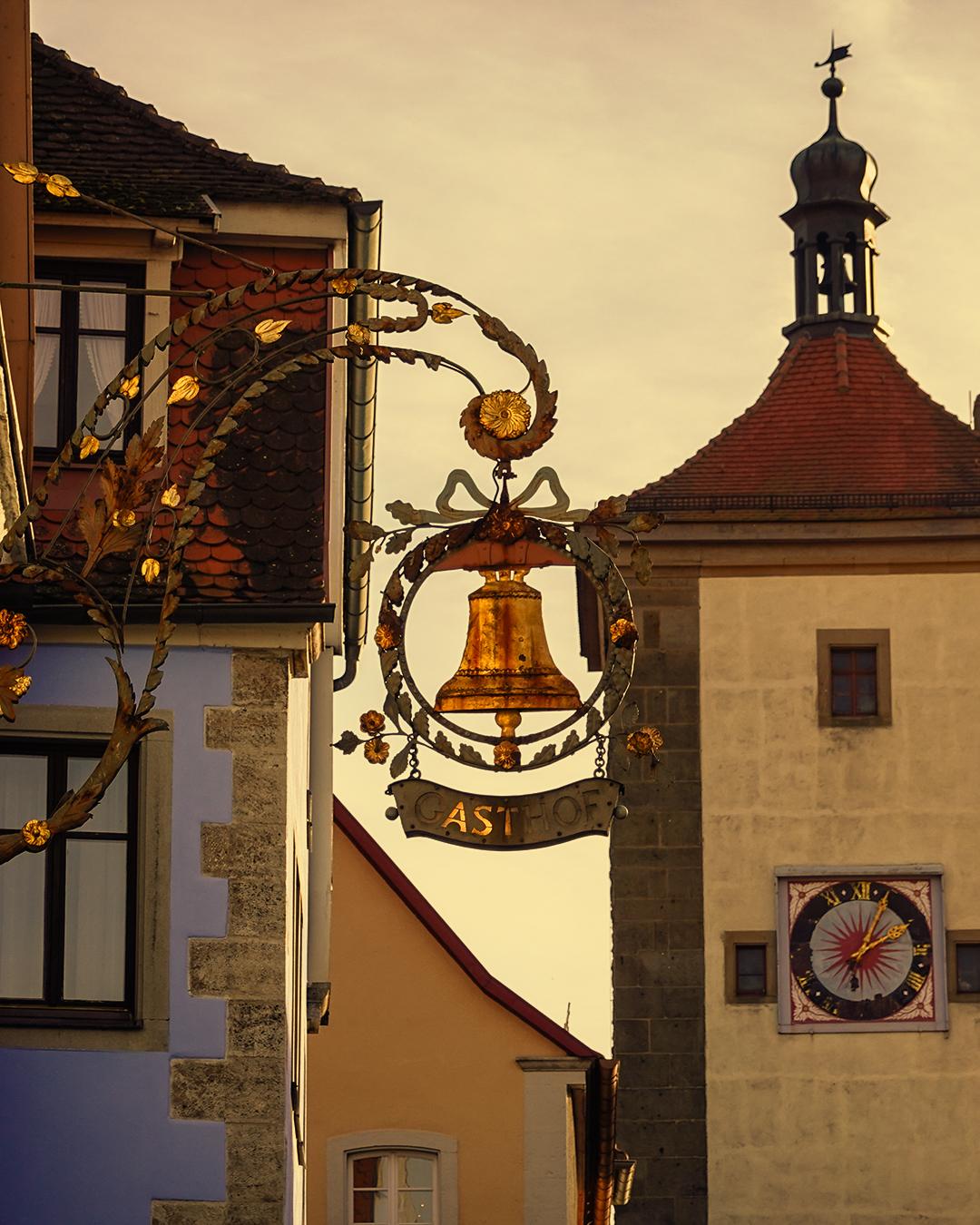
A few spots worth having your camera ready for: the Plönlein, the little forked corner with a crooked yellow house between two towers, and easily the most photographed scene in the whole town. The Rathaus tower, a climb of 220 steps that opens onto rooftop views over the old town. The Burggarten, the old castle garden at the western edge, which looks back over the town and down into the Tauber valley. And the Rödertor, the eastern gate arch framing a row of timbered houses, which photographs particularly well in the late afternoon light.
The places worth your time
- Frauenkirche (Church of Our Lady). The church on the square, and the balcony from which the Christkind opens the market. Step inside if it is open. The calm is a nice contrast to the crowd outside.
- Kaiserburg (Imperial Castle). The medieval fortress on the hill, and the best viewpoint in the city.
- The Children’s Christmas Market (Kinderweihnacht).A short walk away at Hans-Sachs-Platz, built for families, with a nostalgic carousel, a small Ferris wheel, and gentle rides for younger children.
- The Sister Cities’ Market.Stalls run by Nuremberg’s partner cities from around the world, so you can go from Franconian gingerbread to Scottish cake to Nicaraguan coffee in a few steps. A good stop if you want variety.
- Handwerkerhof. A walled craftsmen’s courtyard by the old Königstor gate, near the main station. Handmade goods and a good first or last stop if you are arriving or leaving by train.
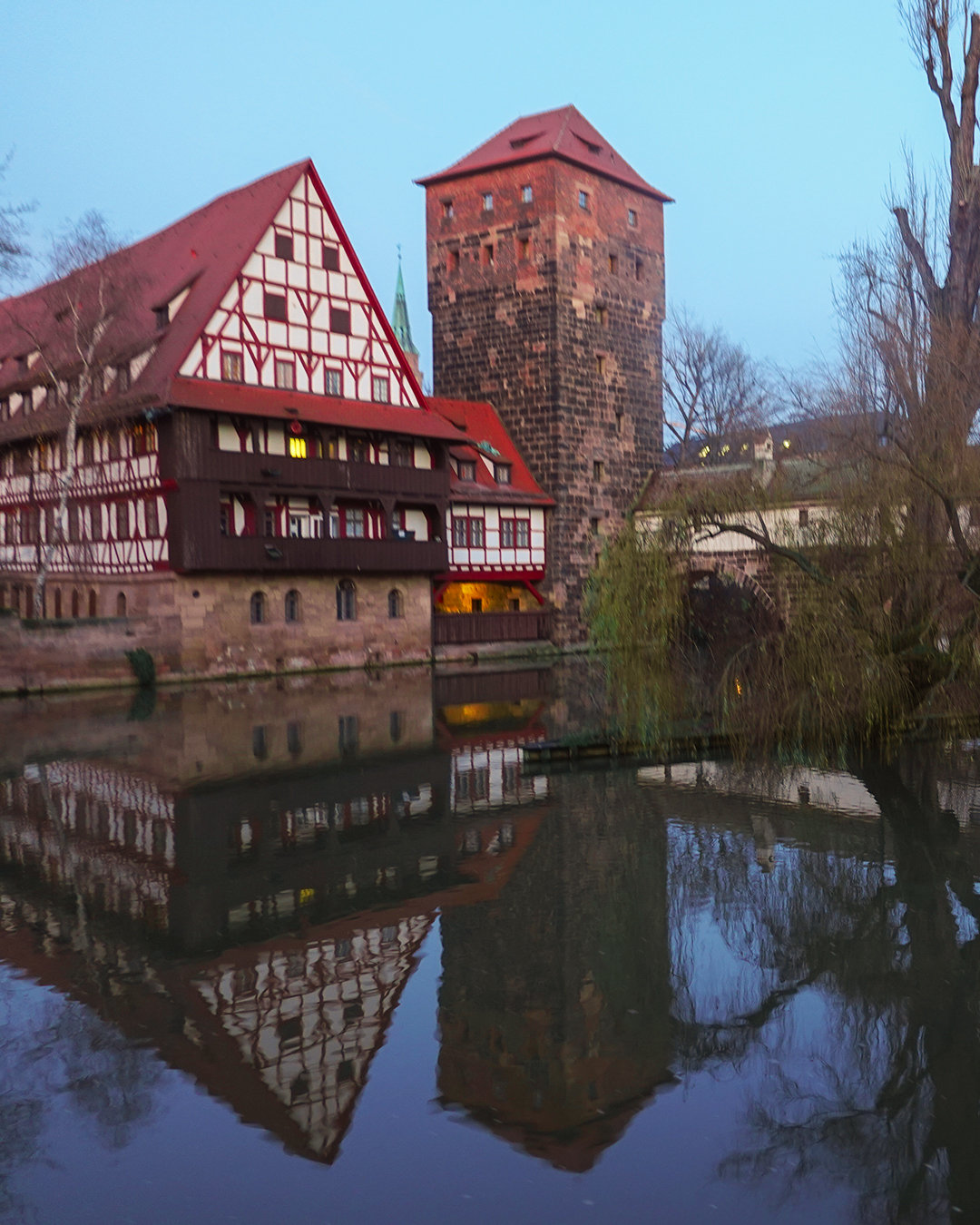
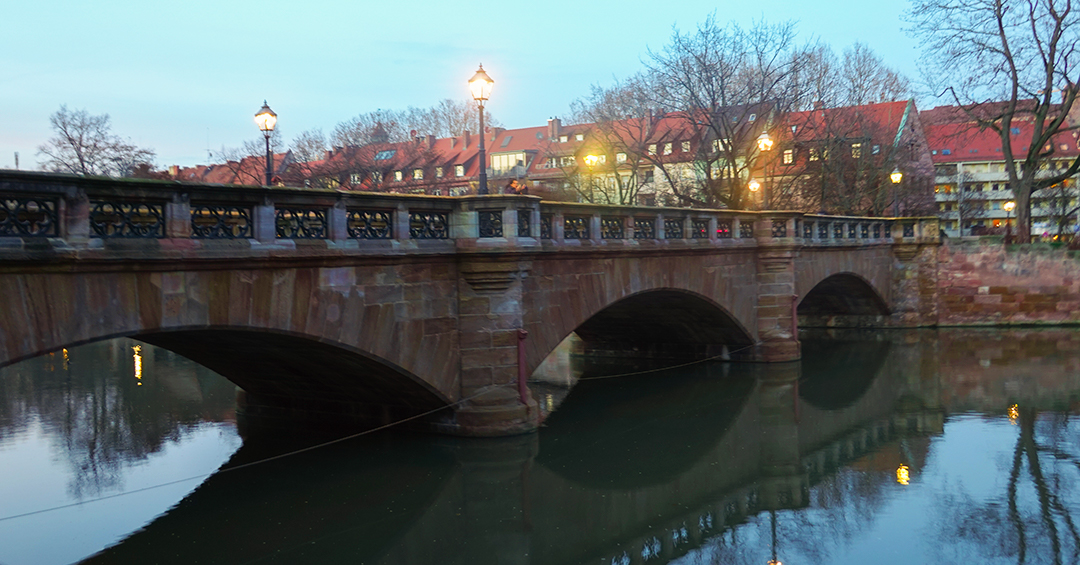
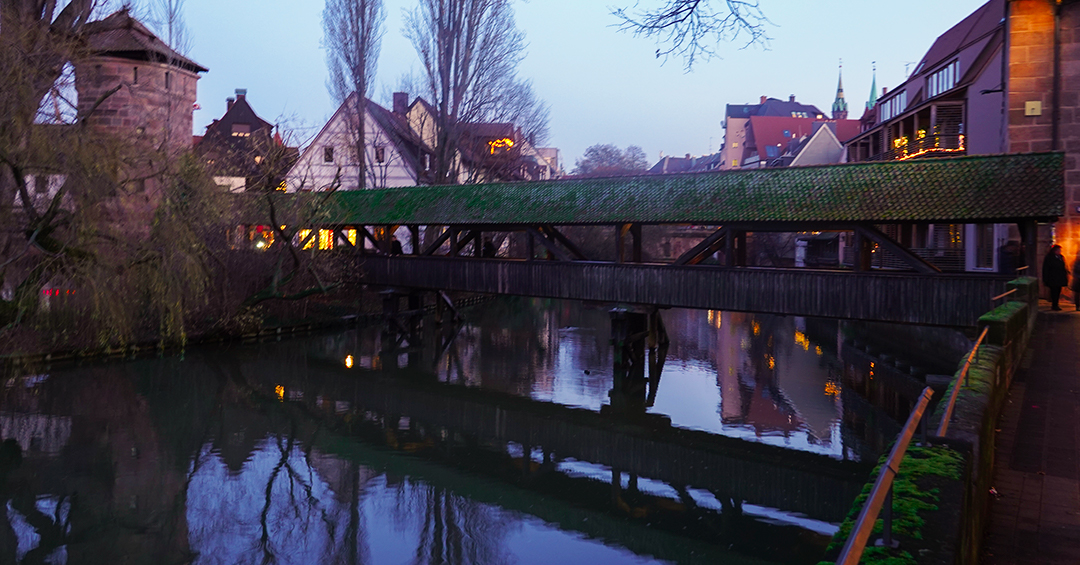
- Weissgerbergasse. One of the prettiest surviving old lanes in the city, lined with restored half-timbered houses. Worth a short detour in daylight for photographs.
What to eat and drink
You will not go hungry, and much of the pleasure of the market is eaten standing up with cold hands.
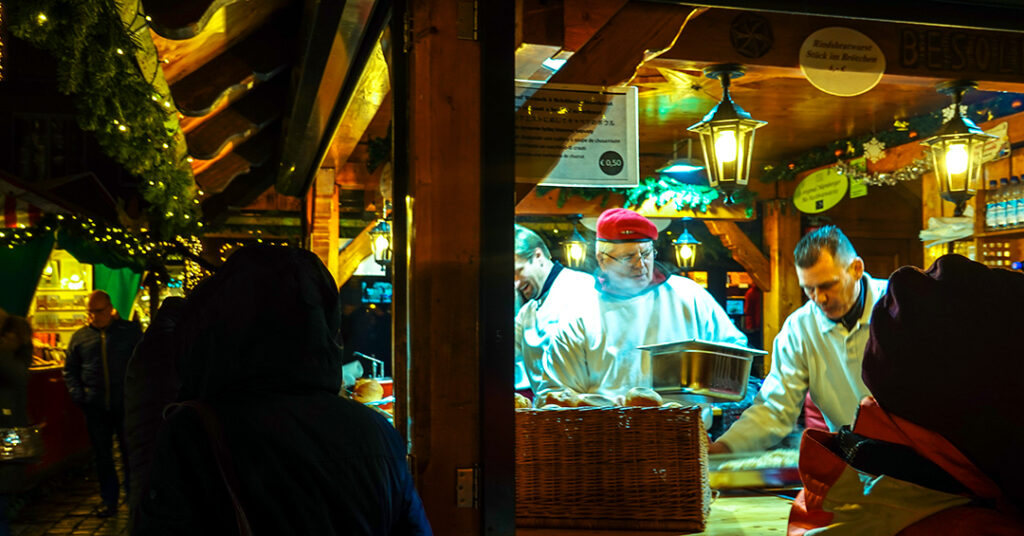
- Nuremberg bratwurst. The city’s sausages are small and herby, and they are the reason people come. Order them as *”Drei im Weckla,”* three in a bread roll. Nuremberg has been making these for more than seven hundred years, so trust the locals on this one.
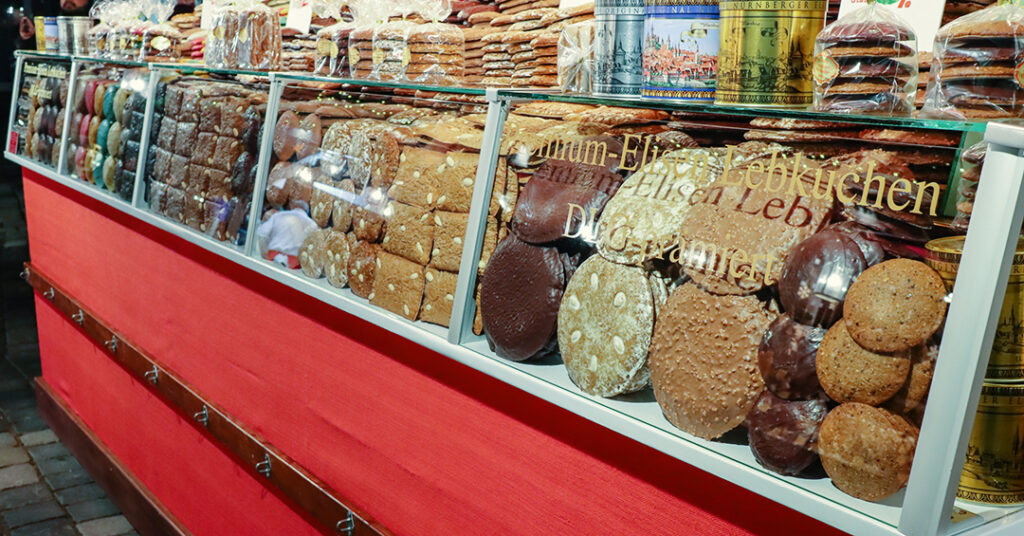
- Lebkuchen. Nuremberg gingerbread, soft and spiced, sold everywhere and made to be carried home. It travels well and makes an easy gift.
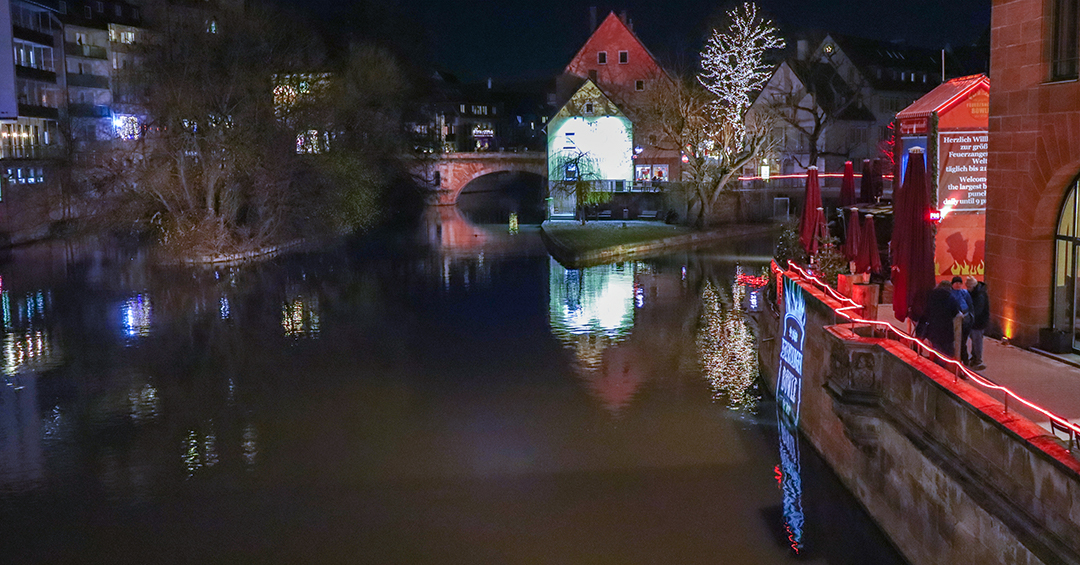
- Glühwein and Feuerzangenbowle. Mulled wine is the standard. *Feuerzangenbowle* is its dramatic cousin, made by setting a rum-soaked sugar loaf alight over the punch. You usually pay a small deposit for the mug and get it back when you return it, or keep the mug as a souvenir.
- Zwetschgenmännle. Not food, but a Nuremberg oddity worth knowing: little figurines made from dried prunes, a traditional and slightly quirky souvenir you will only find here.
- Dampfnudeln. Steamed dumplings served with warm vanilla sauce, soft and slightly sweet, and one of the best things to eat on a cold evening. Franconian stalls sell them fresh, so look for the ones with a short queue, they tend to be the good ones.
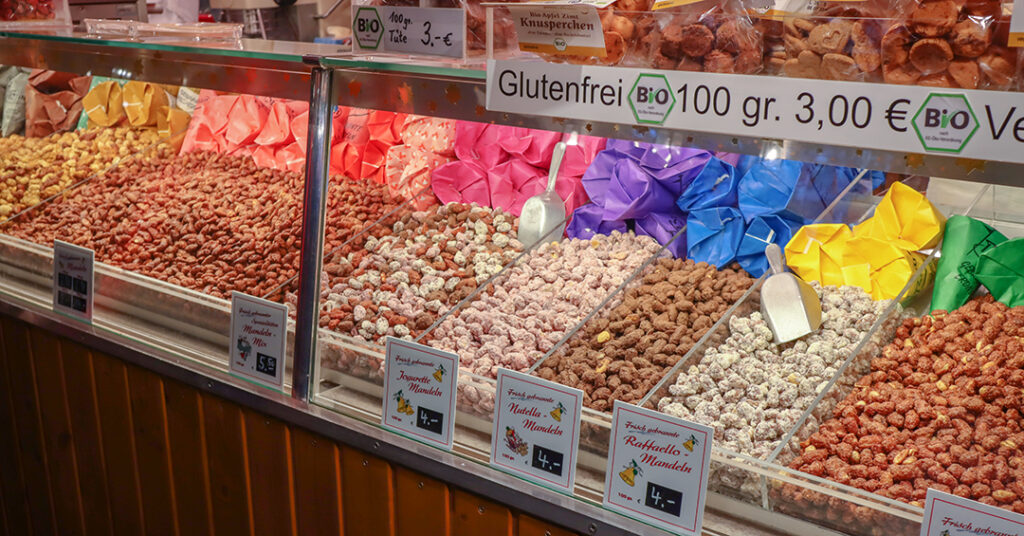
A note for vegetarian and Indian travellers: the market is meat-heavy, but the sweet stalls, roasted nuts, potato specialities, and mulled drinks are all easy options, and the city’s plant-based choices have grown in recent years. On both trips I ended up eating dinner at Indian restaurants in town, Ganesha among them, which is worth remembering if you want a warm, familiar meal after a cold evening outside.
Planning your visit: the practical details
- When to go. The Christkindlesmarkt runs from 27 November to 24 December 2026 (tentatively), open daily from 10 a.m. to 9 p.m., with a shorter day on Christmas Eve (10 a.m. to 2 p.m.). The opening ceremony with the Christkind is on the evening of 27 November. The market closes on Christmas Eve; it does not run through to New Year, so plan your dates accordingly.
- How to get there. Nuremberg is a major rail hub and easy to reach by train from across Europe. I came in from Cologne, and on my second trip from Vienna. Munich is barely an hour away by fast train. If you are flying, Nuremberg’s own airport sits about five kilometres north of the centre and connects to the old town by U-Bahn (metro). Munich Airport is the nearer option for long-haul flights from India.
- Getting around. You will mostly walk. The old town is small and the market is at its centre. For anything further, the city has a well-run network of U-Bahn, trams, and buses. Single tickets can be bought from machines at the stops, and it is worth carrying some cash, since a few of the smaller market stalls still prefer it, especially for small purchases.
- Where to stay. Stay inside or right beside the old town. On both visits I based myself centrally, within sight of the Hauptmarkt, and being able to step out into the market in the evening and back to a warm room minutes later made all the difference. Book early. Nuremberg fills up fast in December, and the good central hotels go first.
- What to pack. Nuremberg in December is genuinely cold, often near or below freezing, sometimes with snow. Dress in warm layers, bring a proper coat, and wear waterproof shoes with good grip for the cobbles. You will be standing outside in the evenings, so warmth beats style.
- Timing and crowds. Weekend afternoons and evenings are shoulder-to-shoulder, and the opening ceremony draws huge numbers. If you can, visit on a weekday, and arrive at the market in the late afternoon to catch both the daylight and the lights.
- The visa. Germany is part of the Schengen area, so Indian travellers will need a Schengen visa. December is peak season and appointment slots get booked out well in advance. Start the process early. The paperwork and the timing are exactly the kind of thing worth getting right before you book flights.
A last word
Nuremberg at Christmas is not a hidden secret. Two million people visit the market every year, and you will feel it on a Saturday evening. It is old, and it is real, and it does not try especially hard to be either. Stand on the Hauptmarkt with a warm mug in your hands while the Frauenkirche is lit up behind the stalls, and you will understand what brings people back a second and third time. I know it is what brought me back.
If you are planning a German Christmas trip and want help with the Schengen visa or the logistics around it, that is exactly what we do at Jaunt Planners. Get in touch and we will help you get there.